
This guide provides an overview of the Shannon Development Photographic Collection held in the Special Collections and Archives department at the Glucksman Library.
© All images held at Glucksman Library. Please contact us for copyright information and permission to reproduce.
Shannon was granted town status on 1 January 1982, but was initially developed in the 1960s to house the thousands of workers in the Shannon Industrial Estate, or ‘Free Zone’, which included Shannon Airport.
Shannon Development (formerly known as the Shannon Free Airport Development Company Limited, or SFADCo) was established by the Irish Government in 1959 as an agency to promote Shannon Airport and the wider Shannon region. Its key achievements include the building of Shannon town; the creation of the ‘Shannon Free Zone’ as the world’s first modern free trade zone; and the development of a National Technology Park, located adjacent to the University of Limerick.
In 2014, Shannon Development was amalgamated into Shannon Group (later The Shannon Airport Group), a conglomerate of aviation, property, and tourism businesses created to drive the economy of the west of Ireland. It was at this time that the photographic archive was transferred to the Glucksman Library, University of Limerick, in two consignments on 22 December 2014 and 5 January 2015.
In 2021, the Special Collections and Archives Department at the Glucksman Library was awarded funding from the Wellcome Trust to catalogue, conserve, digitise and increase accessibility to the Shannon Development Photographic Archive, as part of the New Jerusalems project: increasing access to archives from eleven post-war new towns in England, Wales, and Ireland.

The Shannon Development Photographic Archive comprises approximately 250,000 photographic items, including press cuttings, annual reports and brochures, spanning over five decades. Further information can be found in the corresponding registers, which provide additional context to the negatives. Of particular significance are the photographs taken between 1959–1998, which visually capture the Shannon Development story, and provide unique insights into the life in Ireland in the latter half of the twentieth century. It chronicles the evolution of Shannon town, as well as the broader Shannon region, from a large agricultural base to a leading industrial and tourism centre. There is also material relating to counties Clare, Limerick, Tipperary, Offaly, and Kerry.
The photographs document the stories of the people and aircraft passing through Shannon Airport from the late 1950s onwards, as well as the construction of Shannon town and its surrounds, and the physical and technological expansion of the world’s first duty free zone.
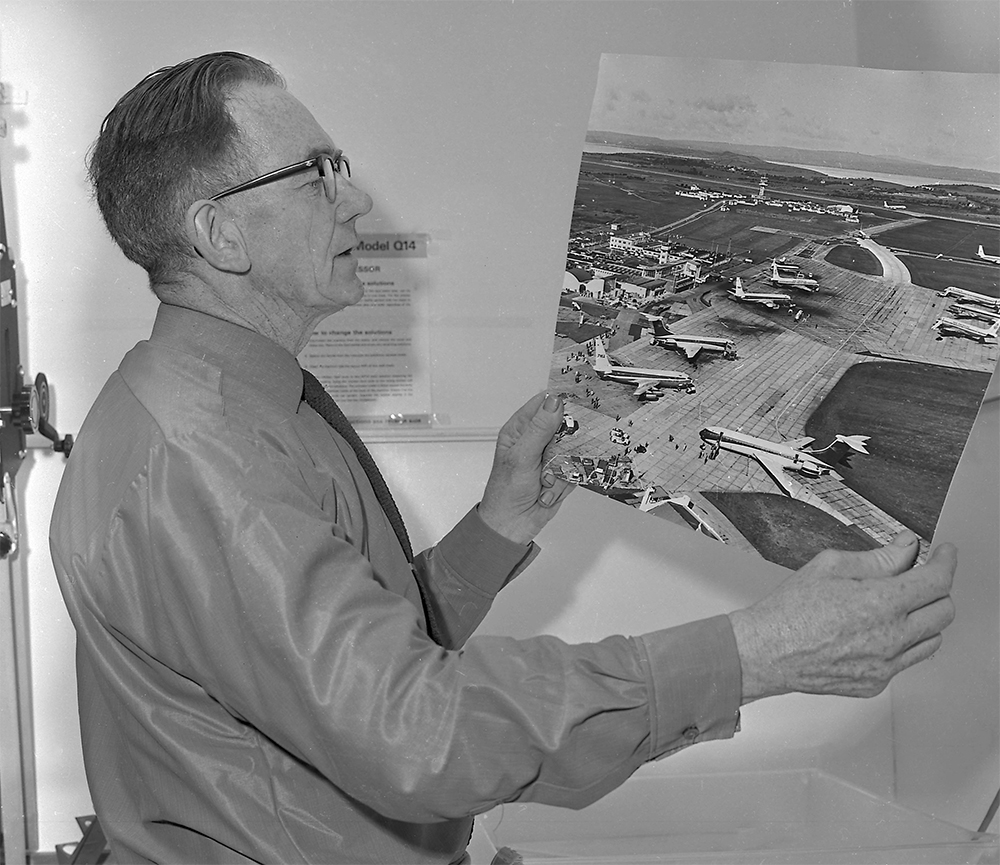
The photographs taken by the Shannon Development photographers were recorded in handwritten ledgers. Multiple negatives were placed in glassine envelopes and given an identification number, and a one-line description of the image was written into an accompanying ledger. While the collection documents little about the Shannon Development photographers themselves, we are fortunate that some of the earlier records refer to some of them by name, for example Joe Clarke and Seán Cooke. The photographers also sometimes took ‘selfies’ allowing us a glimpse at their offices and photographic equipment in Shannon.


When Shannon Airport first opened, local accommodation was scarce, highlighted further with the later foundation of the industrial estate. There was also a lack of public transport, although there was a private bus route to and from nearby city Limerick for airport staff.
It became clear that nearby housing was needed for workers if the industrial estate was to be successful. There was increased pressure on Shannon Development as businesses were reluctant to invest in the industrial estate if their skilled workers could not be housed nearby. It is likely that if the new town at Shannon was not built, the industrial estate would not have developed as it did. Equally, the growing employment opportunities offered at the airport and the industrial estate attracted people to live in Shannon. Over the years 1963–1966, Ireland’s first new town gradually came to life, with employment in the industrial estate doubling over this time.
In response to the need for accommodation for the workers in the airport and the industrial estate, Shannon Development built 136 flats and ten executive houses on Drumgeely Hill. As the first new town in Ireland, inspiration was taken from new towns built in the post-war period in the UK. The town also utilised aspects of the Garden City Movement and the Radburn design principles (O’Connell, 258).


Downes, Meehan and Robson were hired as architects. Fred Rogerson was also hired as a specialist in interior design and town planning. Overall, there were 12 full time technical staff employed at Shannon Development making plans to develop Shannon town (O’Connell, 258).
The photographs from the collection from the 1960s and early 1970s demonstrate the rapid expansion of Shannon town, from the opening of the first local grocers to the development of Shannon Town Centre, a vibrant shopping mall hosting larger chain supermarkets and a wider variety of shops and businesses.


As Ireland’s first planned town, Shannon was regarded as an opportunity to significantly improve the quality of life in rural Ireland and represent the exciting possibilities of going ‘all-electric’. Ireland’s Electricity Supply Board (ESB) worked in tandem with Shannon Development to plan the new homes of Shannon town as the homes of the future – stylish apartments close to the new town centre, where residents had access to all modern conveniences, and by implication, a much better quality of life than previously available. A pamphlet issued by ESB in 1961 outlines these futuristic homes, promising water heaters, electric cookers, refrigerators, electric floor warming, electric fires, convector and infra-red heaters, and stating that these ‘up-to-date conveniences in your flat will give you every satisfaction and make living a lot easier.’


Despite lacking the roots of a traditional town, a tight-knit community grew in the new town of Shannon. A child who grew up in Shannon notes that ‘we enjoyed our unusual school surroundings, our international playmates, playing on the building sites after workmen finished for the day… and the freedom to roam and explore the countryside around us. When a playground with swings, jungle jim [sic] and slide was installed in Drumgeely our world was complete’ (Carey, 8).


Brendan O’ Regan, the chairman of Shannon Development, researched new towns in the UK and was keenly aware of the importance of forming community ties amongst the isolated new residents. A qualified social worker was hired as a community officer who helped new residents settle into the town. This community officer gave residents typed details of social activities, organisations, and services in the town. An annual ‘Getting to Know You’ ball was also held by Shannon Development, beginning in 1960 (O’Connell, 274).
As a new town with plenty of capacity, Shannon town as also attractive to families from further afield who were in search of a better life. Those fleeing the Troubles in Northern Ireland in the 1970s moved to Shannon in great numbers – during this decade, it is estimated that approximately one third of Shannon’s population came from the Northern Ireland. The 1970s also saw a small number of Chilean refugees arrive in Shannon, forced from their home by the Pinochet regime, under a United Nations-sponsored programme of resettlement. In addition, the executives and their families that arrived in Shannon from abroad for employment in the Free Zone, ensured Shannon was considered ‘uniquely cosmopolitan’ for its time, a vibrant and pioneering town with a strong sense of community.
By 1981, Shannon had over 8,000 residents, predominantly young people and families. By 1977, there were 80 organisations and clubs in the town and the facilities included churches, schools, community halls, health centres, surgeries, sports clubs, swimming pools, tennis courts, children’s play areas, handball alleys, and two pubs. Discos were held in the community hall, as well as supper dances in local pubs, and dinner dances in the local hotel. Films were also shown every two weeks in the community hall. There was a drama group that presented plays once a year. There were traditional Irish music sessions every week, and the only jazz band in the county was based in Shannon, with shows every weekend (Stephens, 13).
The theme of community is consistently evident throughout the photographs in the collection, capturing the large crowds of Shannon residents celebrating local events together, from St Patrick’s Day and National Children’s Day parades, to Halloween costume-contests and the opening of new amenities, to community sports days. The importance of sport features heavily in the images, which document a wide assortment of activities enjoyed at Shannon, from hurling and football, to soccer, hockey, golf and tennis.


After World War I, commercial aviation continued to advance, with further destinations reached through numerous short haul flights. The airline industry was anxious to develop long haul flights across the Atlantic Ocean. Seán Lemass, Minister for Industry and Commerce, saw the value of air travel to Ireland and believed that it ‘released [Ireland] from the many disadvantages of [its] geographical situation and island status.’

the first photograph in the collection, c. February 1958 (P50/1/1/1)
The harbour at Foynes in Co Limerick, with its existing flying-boat base, was chosen with plans to develop a transatlantic airport that would also serve airplanes at Rineanna in Co Clare (O’Connell, 45). These two terminals together became the Shannon Airport, Europe’s most important transatlantic airport. The newly founded transatlantic route ensured ‘every transatlantic flight, either east-bound or west-bound, landed in the [Irish] Free State’ (O’Connell, 44-45).
In 1943, Brendan O’Regan was appointed as the Catering Comptroller at the airport (O’Connell, 56). Under his management, Joe Sheridan came up with the first Irish coffee to warm up passengers after long journeys with inadequate heating on board (O’Connell, 71).
Flights ceased at Foynes on 16 February 1945 and the first transatlantic commercial airplane landed at Rineanna, Shannon, on 23 October 1945 (O’Connell, 77).
As few transatlantic flights could travel from America to Europe without a stopover at Shannon, the airport became known as a ‘gateway’ between the two continents. Shannon Airport successfully capitalised on this, offering a viewing gallery for visitors to view planes – and their VIP passengers – take-off and landing. The airport was also home to the world’s first duty-free shop, offering the very best Irish and local produce.
The development of jet aircraft removed the need to land at Shannon for refuelling (Lichfield, 42). Jet aircraft also necessitated further investment in the Shannon runway. There were arguments that transatlantic flights should be instead moved to Dublin, along with existing staff. The future of Shannon Airport was at risk, unless a reason for passengers and freight to stop at Shannon could be found (O’Connell, 191-192).
As an early precursor to SFADCo, the Shannon Airport Development Authority (SADA) was established in 1957 with the aim to make Shannon Airport more appealing through the promotion of freight traffic and the development of nearby tourist facilities (Lichfield, 42). This was headed by Brendan O’Regan and funded by the Shannon Airport Sales and Catering team (O’Connell, 196).


In 1959, Shannon Development received funding from the government and was appointed the additional functions of establishing an industrial estate and housing for workers, with tax incentives. The Industrial Development Authority (IDA) was enlisted to assist in this process (Lichfield, 42).
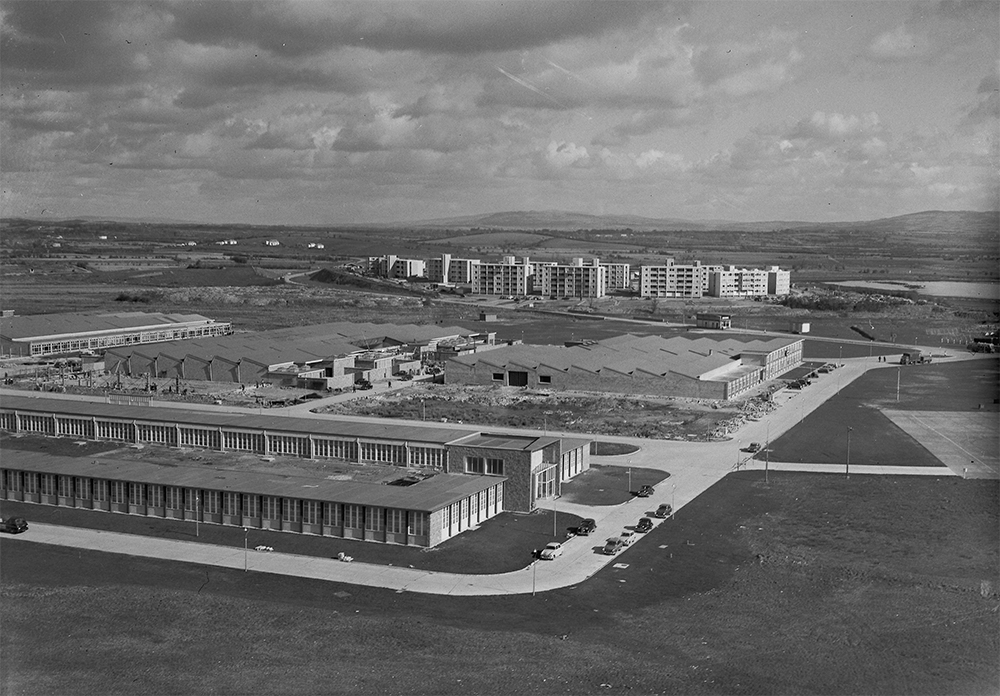
The first factory at Shannon’s new industrial estate was CO-Am-CO, a new Irish subsidiary of a US company, which constructed bowling alleys (O’Connell, 213). Rippen Factory officially opened at Shannon on 10 July 1961. Over 300 workers were employed and trained there at a plant of 53,000 square foot (O’Connell, 225-226). Standard Pressed Steel (SPS) was also one of the first factories established in the industrial estate. SPS manufactured precision tooling and fasteners. EI Electronics was established in the industrial estate in 1962. This company was a great success in Shannon and went on to become a major supplier of smoke detecting equipment in Europe. EI Electronics remains in Shannon , with a significant workforce to this day (O’Connell, 239).


Celebrity visitors to Shannon
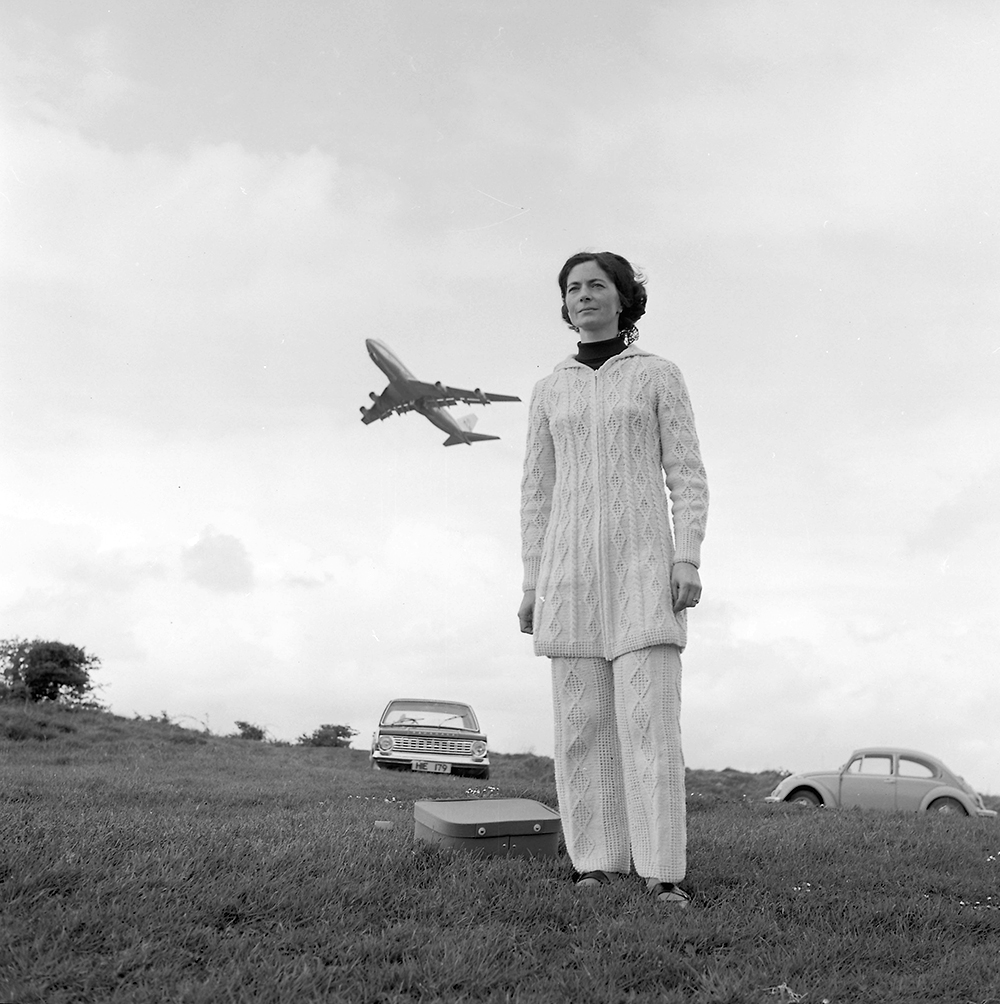
The airport and duty-free shop quickly became the place to see, and be seen by, celebrities and world leaders on official visits to Ireland, including everyone from Princess Grace Kelly of Monaco to Mohammed Ali, John F Kennedy and Mick Jagger. Such visits usually required a press photograph to be taken by the Shannon Development photographers, modelling souvenirs such as Irish tweed or knitwear, or feasting at the nearby Bunratty Castle medieval banquet. In consequence, Shannon Airport and its associated traditional Irish heritage sites were imbued with a touch of glamour. In this way, 1960s Shannon became the physical embodiment of the point where traditional, rural Ireland met the chic and modern international stage, a dual identity that coexisted for many years.


Fashion
The evolving fashion of the 1960s and 1970s features heavily in these photographs. The collection documents how some trends developed – and quickly faded away! – as the decades progressed. The photographs also capture local Irish fashion and handknit styles for sale at the Duty Free shop.


Tourism in the Shannon region
The collection also contains photographs relating to the various heritage sites in the wider Shannon region, including Bunratty Castle and Folk Park, Knappogue Castle, Dromoland Castle, Craggaunowen, and the Cliffs of Moher, which provide a valuable insight into the development of new tourist attractions in the region during the 1960s.




You must be logged in to post a comment.