

by Anna-Maria Hajba, Archivist
Join us on a journey from Calcutta to the Island of St Helena through the pages of a journal kept by Harriet Marshall between 9 January and 4 April 1847 on her way from Allahabad to County Tyrone. A weekly blog post series, running 10 January to 4 April 2025, presents transcriptions from her journal for the preceding week.

10th [February] The anniversary of the Battle of Sobraon, poor Mrs Faithful [sic]1 & Mrs Fisher2 have completed their year of widowhood[.]3 the former I saw tears gathering in her eyes, poor young thing to be left thus early in life a widow, her only child4 an infant died 3 weeks before her Husband5 so she lost two of the dearest & nearest within a month, she looks under twenty years old & I like her very much, she possesses great interest in my eyes, to be thus early in life deprived of the delights of her heart. How very hot it has been today as hot if not more so than I ever felt it in India & so stupidly we have all calculated on a month of cold weather, & have packed up all our cool clothes in consequence & shall have them when we do not require them. how we sigh for a Punkah,6 it heats one so to fan themselves.
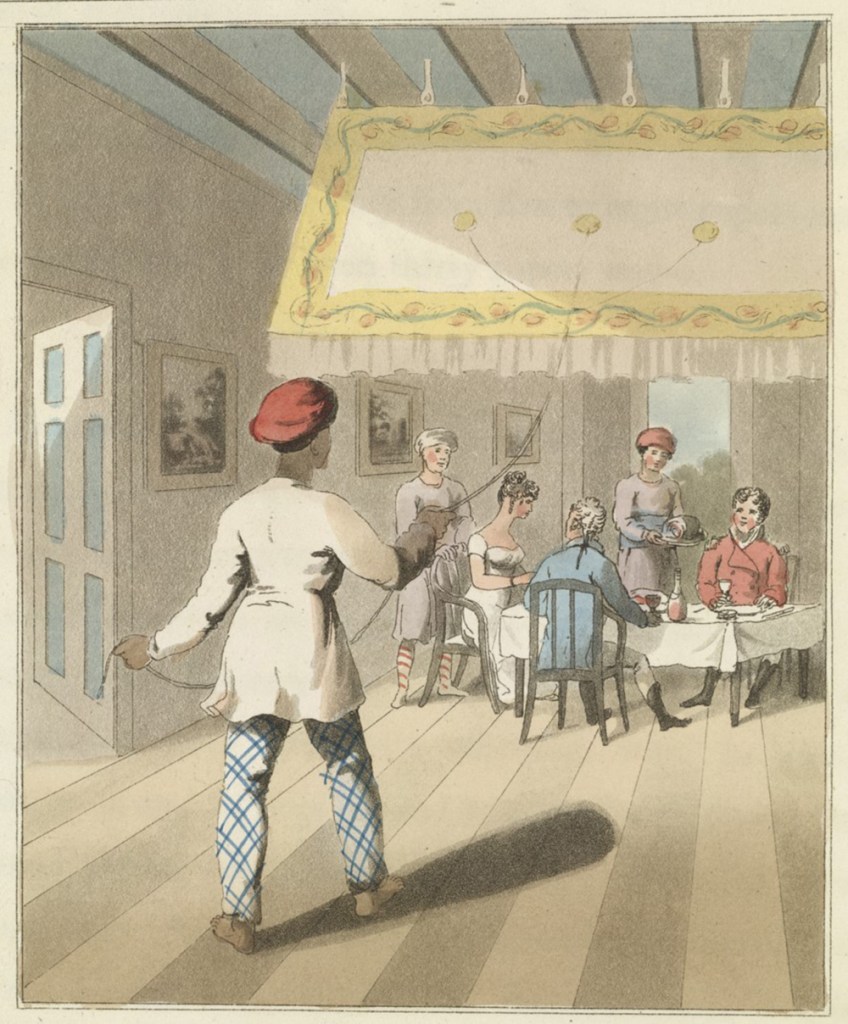
11th [February] The heat is still intolerable worse becalmed too to make us feel it more. I am quite laid up with the heat, & am so weak from a return of an old complaint which I used to suffer from in the hot weather in India that I cannot walk without my limbs trembling under me, once across the Line7 we may hope for its getting cooler, every day, & then also we may hope for a fair wind, as it is they say we cannot expect wind till they cross the Line. Cool clothes are all the vogue, I have taken to short sleeves & find it very beneficial[.] Mrs Delamain is the only other lady who has taken to short sleeves, the others envy us they say but won’t follow our good example.
12th [February] The calm still continues but not quite a dead one[.] one great comfort is that for the last 3 days our Ports have been open, this has enabled me to have wind in any little that may be blowing ours being the sarboard [sic] side. Mrs Mason quite envies me in my swing cot for I get all the wind being on a level with the Port. I shall always adopt a swing cot in any voyages. Last night the young gentlemen danced amongst themselves several of us stood & looked on[.] they danced a quadrille Polka & Waltz, the fiddler had only 2 strings to his instrument so the music was not so captivating, how quick they danced, it must have made them feel very hot, but they did not seem to feel it. I must get a look at the Log book to get a memo of the rate we have been going. I wish to get a chart of our route, it would be very pleasant to recur to it when talking over the voyage with dear Robert.8
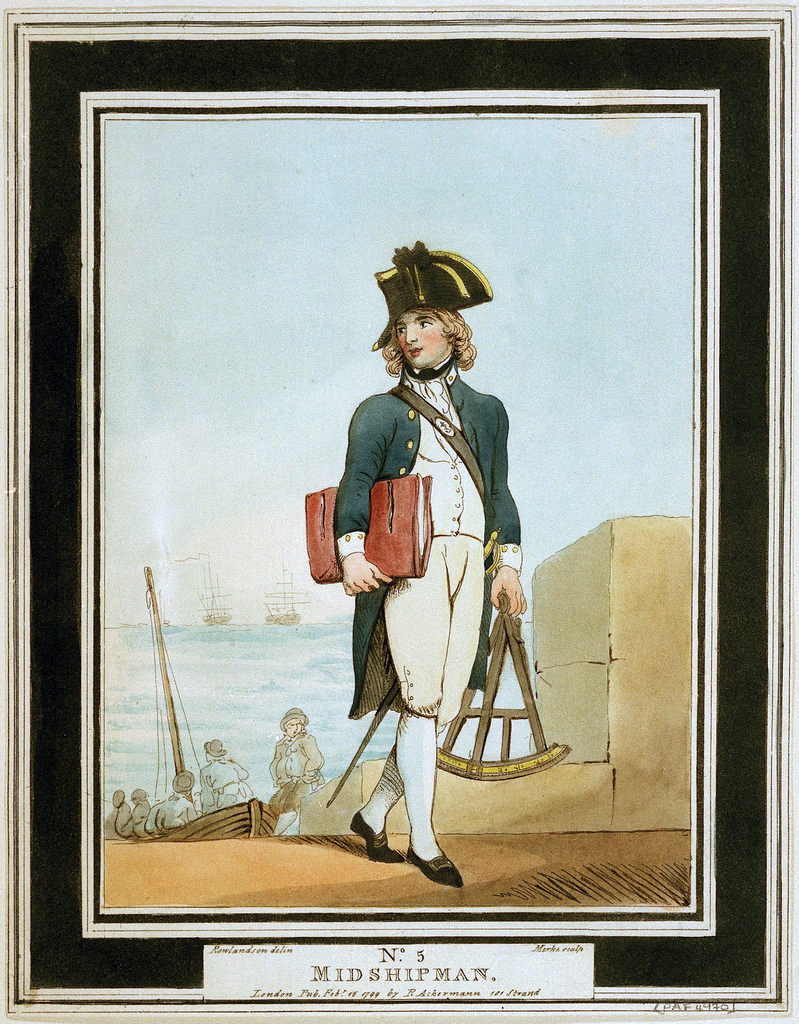
13th [February] The weather during the day was very oppressive but towards evening a delicious soft breeze sprung up, we crossed the Line between 8 or 9 o Clock P.M. The young gentlemen as the Midshipmen are always called got up a dance among themselves & after the first quadrille came & begged the Ladies to join, which Mrs Henning9 Mrs Wintle, Mrs Moule & self did. I danced with Mr Ward of the 68th N. I. a fellow Passenger, the 1st dance, then the young gentlemen danced the Lancers10, but as my children11 were getting sleepy I did not like to remain up on deck so came down to my cabin, heard their Prayers & put them into Bed comfortably & went on deck again, where another quadrille was put up, this time I danced with Mr Meredith (I know not if I have spelt the name aright), one of the young gentlemen he is the born ideal of a midshipman, so joyous frank & manly & boyish just Marriott’s [sic] the author of so many splendid Naval Romances,12 idea of a young middy. This is the character he has as yet appeared to me, he enters into the life & soul of dancing, after this a Polka [—] & a Waltz were danced among the young gentlemen, I was quite put into spirits with the merry music the fiddles & flute gave us & had a good walk when the Dancing was put an end to by the naval method of striking 8 Bells are struck.
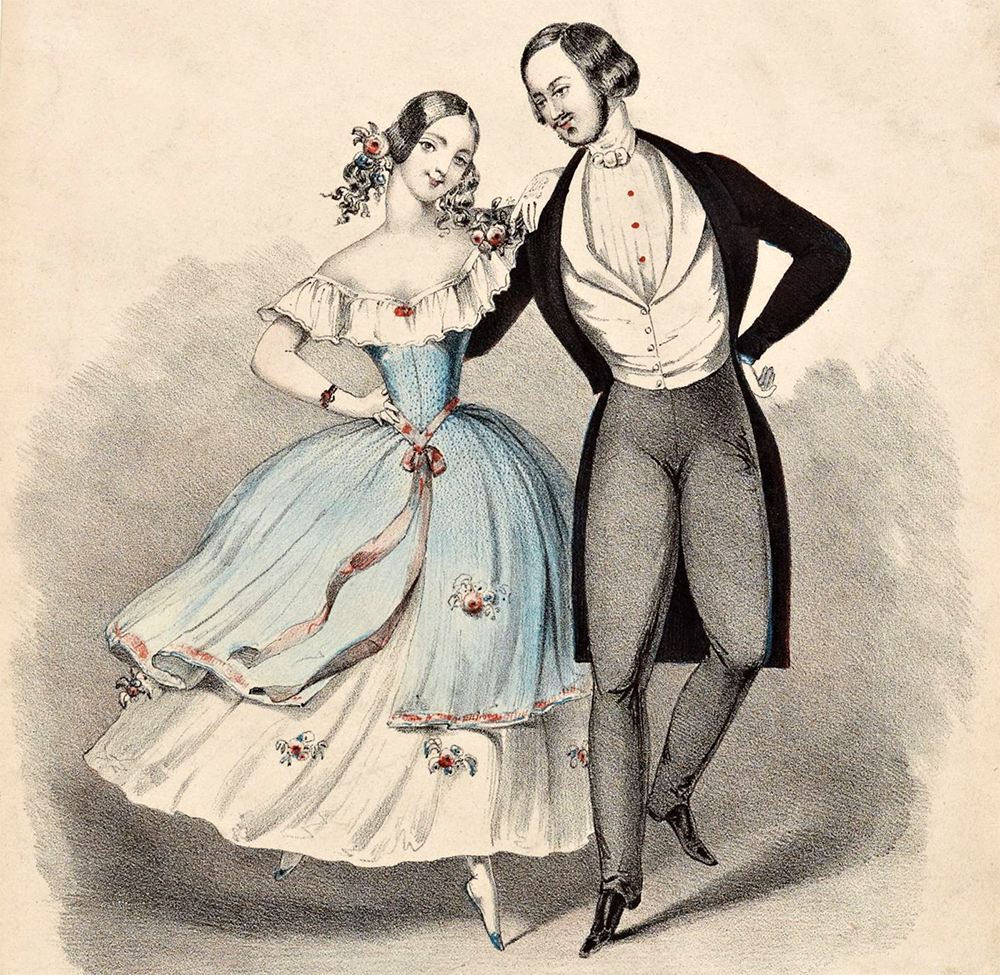
Whilst Captain Kennedy & Eliza13 were walking up & down Mr Meredith joined us, he has promised to make an extract from the Log book for me, this will be a very pleasant reference in future. Before I knew that the Ladies would join in the dancing whilst Captain Henning was standing behind my chair, I turned round & begged that the young gentlemen may be allowed to dance again on the anniversary of my Birthday which will be on the 10th Inst. next Tuesday[.] they are obliged to ask Leave every time they wish to dance so I thought they would be pleased if they knew one of the Lady Passengers had asked for them, a short time after this Captain Henning14 came up & told me he intended making it quite a Ball to keep up my Birthday[.] every one would put on their best in honour, this is very kind of him, he then begged me to do him the honour of opening the Ball with him. Anything as a change from the continued monotony of the voyage is truly pleasing – I had nearly forgotten to say how delighted I had been to find one of [the] Sergeants among the Invalids a really respectable man, the son of a gentleman to undertake the charge of some of the boys & to teach them reading & writing, my boy has been with him 4 days for about an hour or so each day, & now dear Bobby is progressing so nicely, this arrangement has taken such a load of anxiety off my mind for it is not always that I can conveniently hear the poor boy read besides learning with several others, it causes a spirit of emulation among them & will break them in for school[.]

this is the 15th day since we came on board, as yet there is no perceptible change in our children tho’ I bathe them regularly in salt water, the first thing every morning, how I long to see them with bright rosy cheeks however I am most thankful they have good spirits & appetites. How much dear Robert would have enjoyed the sea voyage now, what a sad pity our circumstances would not allow of his coming home with us, how I envy the Ladies who have their Husbands on board[.] grant O Lord that we may at some future period enjoy a sea voyage together, I shall be more experienced than I am at present & shall know how to set to work in many things that I am now feeling I wish I had known of before.
Harriet’s journal has been digitised and is available to read in full on the UL Digital Library.
- Louisa Sophia Faithfull née Wilson (1826-1858), widow of Lieutenant Henry Jacob Young Faithfull (1823-1846).[↩]
- Lucy Fisher née Vincent (b. c. 1805), widow of Captain John Fisher (1802-1846).[↩]
- Captain John Fisher (b. 1802) was killed in action on 10 February 1846 at the Battle of Sobraon.[↩]
- Richard Turner Lumley Faithfull, b. 6 June 1845, d. 11 January 1846.[↩]
- Lieutenant Henry Jacob Young Faithfull (b. 1823) was killed in action on 10 February 1846 at the Battle of Sobraon.[↩]
- Punkah = a large rope-controlled fan fixed to the ceiling operated by a servant.[↩]
- Crossing the line = crossing the equator.[↩]
- Harriet’s husband, Dr Robert George Marshall (1813-1857), an army surgeon.[↩]
- Melina Henning née Smith, wife of Commander Alexander Henning (c. 1792-1871), captain of The Alfred.[↩]
- A quadrille mimicking the movements of lance-carrying cavalry soldiers.[↩]
- Her son Robert (‘Bobby’) George Swayne Marshall (1841-1915) and daughter Harriett (‘Harry’) Susan Marshall (1842-1926).[↩]
- Captain Frederick Marryat (1792-1848), whose many novels include the naval romance Mr Midshipman Easy (1836) and the children’s book The Children of the New Forest (1847).[↩]
- Captain James Don Kennedy (1806-1898) and his wife Eliza Madelina née Turner (1820-1890).[↩]
- Commander Alexander Henning (c. 1792-1871), captain of The Alfred.[↩]

You must be logged in to post a comment.