
by Anna-Maria Hajba, Archivist
Join us on a journey from Calcutta to the Island of St Helena through the pages of a journal kept by Harriet Marshall between 9 January and 4 April 1847 on her way from Allahabad to County Tyrone. A weekly blog post series, running 10 January to 4 April 2025, presents transcriptions from her journal for the preceding week.
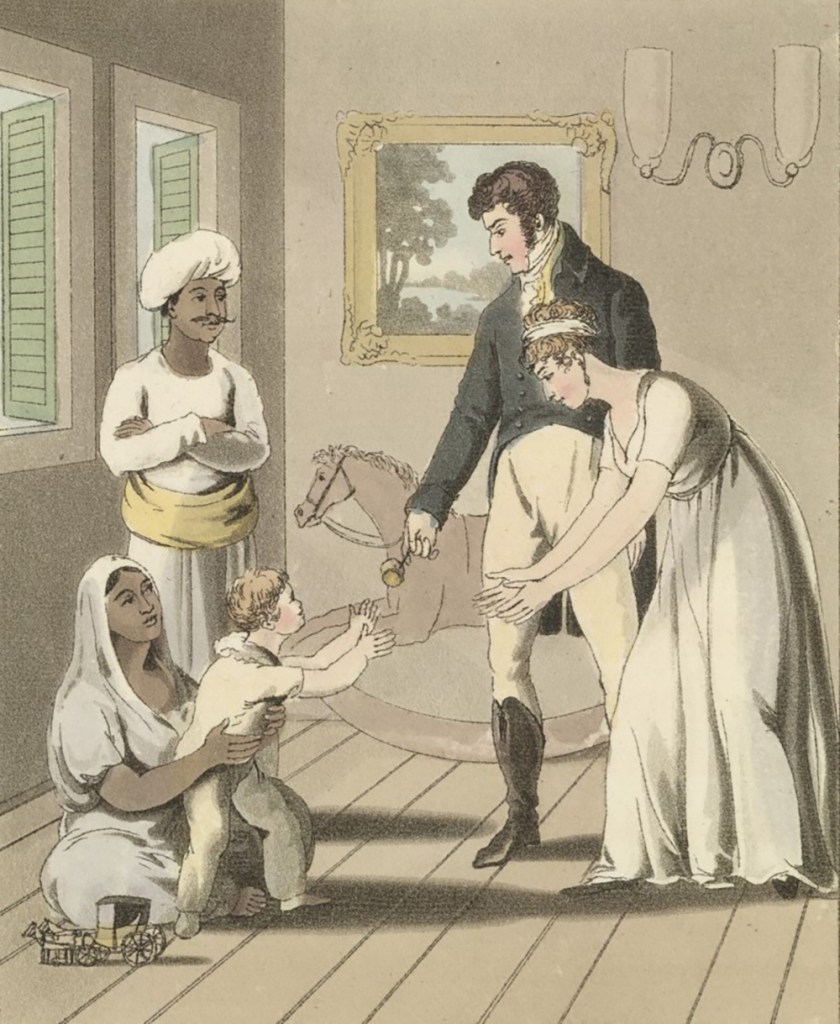
Sunday 17th January 1847 I have been spending this day with Eliza, what a deal of trouble the Baby’s Ahye1 has been giving, that is the worst of these native wet nurses, they will change their minds at the last moment, and never think that they nearly worry’s [sic] a person’s life out. The light was going out when I had written thus far & for some nights before leaving Calcutta I was so busy & tired that tho I used to sit up till 11 & 12 O Clock at night I had no time to write my Journal so I must manage to sum up all my doings & sayings in some way or other.
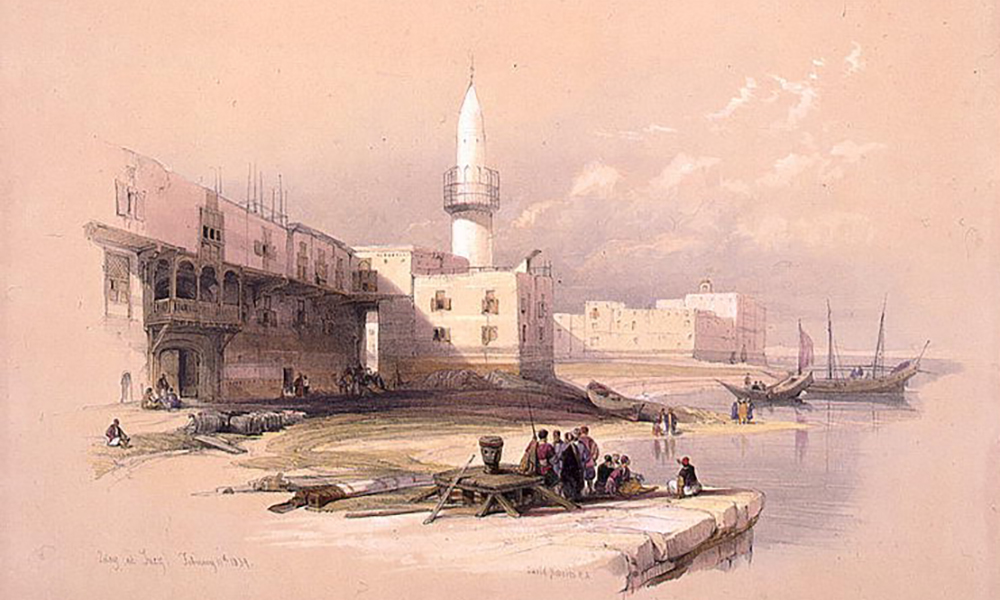
11th February 1847. This is the first day I have been able to take up pen & ink since the Pilot left us out at Suez. We came on board The Alfred on the Evening of the 29th January[.] I met a number of people I had known before & whom I had not met for years. Captain’s [sic] Gray & Rutherford, I was most anxious to meet the former as in Anna’s last letter she mentions that she knows the grandmother of a child that Captain Gray is taking home along with his own 4 motherless little things. He is going home in the Malborough [sic] so I must inform Anna when I arrive in England, he will not be there for some time after us.
Captain Rutherford I had not met since the year I was married he was then in the 28th N. I. now he holds some staff employment in Calcutta.2 I did not recognize either of these people but they knew me. how strange meeting people whom I have not seen for years on the eve of sailing for England it was so unexpected.
The Pilot left us on the 2nd we then had to shut our Ports, I shipped one sea3 which was enough to frighten me, we went on at a gallant rate till the day before yesterday the 9th of February when after a good deal of Rain & wind a calm succeeded, many people are delighted with this kind of weather, as the motion of the ship going at 8, 9, or 10 knots an hour made them fail very much but I am thankful to say that I never for one moment felt the least squeamishness[.] even the Captain calls me the Queen of Sailor’s, this will show how merry & cheerful I was ever, my Harry4 suffered one morning but it wore off during the day, & she has never been troubled since, my boy5 has not proved himself such a good sailor as he was sick several times, mustard is the only thing that has done him any good for since he took it he never has complained[.] every one else has called in the Doctor whenever they or their children felt unwell, poor man he must have a tiresome office for being an old sailor he has of course no feelings in unison with those that suffer, I have no personal sympathy either for those who are suffering for I cannot understand how the motion which seems to give new life to me can ever make one feel unwell[.]

It seems more like a dream than a reality for me to be crossing the sea again, it all appears so new & strange the people, the ship, the broad & seemingly boundless Ocean, that I can not but wonder that other people do not feel the same, I could not stay longer than necessary to sleep & dress in my own cabin when the ports are closed, it is so dark & devoid of wholesome air, nothing will ever tempt me to take a cabin below again in any ship, I should like a stern & side cabin upstairs, or the 2 side ones beyond the cuddy[.] the stern cabins below tho’ they look beauties when the ship is in the Harbour are I think very uncomfortable ones at sea, even in a calm[.] poor Mrs Fisher’s6 cabin shipped a sea, I try to air & keep my cabin as pure as I can, & am thankful that my attendant helps me very much in my endeavours, she is a very good servant & I am very much pleased with her, she does every thing I tell her, & even anticipates my wishes.
The first disagreeable conversation took place yesterday by which I was inexpressibly annoyed. I know not how I have offended Mrs Watt7 or whether it is her usual manner but from many trifles I fancy she does not quite like me, it is not by open words or deeds that one can feel that they are disliked, but she wants an open heartedness, which I alway[s] look for in every body who professes to like me but to go on with my story Eliza8 began by saying to Captain Watt, “so! I hear you have given us ladies nicknames pray what is mine?” The evening before I had unfortunately mentioned to her that Captain Watt was a funny man[.] he asked me every day if I would not like to know the different nicknames he had given everyone on board, this was a stupid thing for me to tell her but I never expected she would ask him what name he had given her. I was much annoyed when Mrs Watt warmly took up the remark by saying to me “so Mrs Marshall you have been telling tales[”], I do not know exactly what I said in reply but Captain Watt took it very good naturedly & tried to laugh it off & nothing more would have been said if Mrs W. had not stupidly kept it up by saying across to Mrs Wintle that some people had been trying to make mischief by giving out that her Husband gave nicknames to people. He was very angry & told her not to be a fool! This was strong language & I was very sorry that he had made use of such, in such a public manner too! He observed how annoyed I was & said “never mind my good lady I only give nicknames to those I like best.[”] there was nothing more said on the subject but still I continued very unhappy all the rest of that day & night too, I will try never to say anything again that will be able to cause a moment’s pain. Mrs Reid is the greatest & most ladylike person on board I like her very much, she is in a delicate state of health but she is so very gentle in all her words & ways that no one can help liking her.

Mrs Wintle is a ladylike person but she is rather selfish about not allowing other children to play with hers, however hers come into my cabin every day, & are delighted with my guitar which I have been playing a good deal of late. Mrs Fisher is a little affected piece of goods. She amuses me very much at times by talking in a most celestial way of people, as if she just knew there were such persons in existence but were far beneath her to think about. She says that pure fresh air is the only thing that gives her life, as if it did not do so to every body, & if she breathed but for a moment any tainted air, she would die, such affectation, then the other day a servant was filling up Captain Watt’s glass with Beer, when she said as if the idea was horrifying to her tender sensibilities “Oh do not bring that near me you’ll kill me as I cannot bear even the smell of Beer near me[”], & begged Captain Watt to put his glass on the other side. She has not made her appearance at the dinner table since. Foolish little woman, she prefer[s] the confined close air of her own cabin to that of the large & airey [sic] cuddy. I cannot but wonder how ladies can remain in their cabins eat their meals & sleep all in the same place, nothing but being obliged by severe illness to keep my bed would keep me in my cabin.
Mrs Birrell is the last lady on our side of the cuddy, she is affected too but in a different way from Mrs Fisher[.] next to her sits one of the young gentlemen as they are called, there are 12 of them that take it by turns to come to the cuddy table, they are a very gentlemanly set of boys[.] I heard that Mrs Birrell said she never spoke to any of these young gentlemen, this is a fib for she seems to take great delight in talking to them, I can seldom get a word out of her. She is going home on account of a dreadful palpitation of the heart, but without wishing to be unkind, I do believe there is very little the matter, with how she sets to panting & gasping every time she comes on deck, but she never changes colour, she has alway[s] a slight colour on her cheeks which very few ladies can boast of, she however is willing & obliging as far as lays in her power. I do not dislike her in spite of all that I have heard to prejudice me against her[.] it is very bad to listen to any thing against another, before you know them, but people are too good natured in their proclaiming anothers [sic] faults. We ought to like people as we find them. It was Lady Littler9 who first prejudiced me against Mrs Birrell, but I like to judge for myself & have narrowly watched Mrs B. in consequence, & do not dislike her[.]
Harriet’s journal has been digitised and is available to read in full on the UL Digital Library.
- She probably means ayah, a nursemaid employed by Europeans in India.[↩]
- Captain Walter Rutherford (1801-1856), appointed commander of the 28th Native Infantry in 1841 in the rank of Major, and appointed executive officer in charge of circular and eastern canals in 1845.[↩]
- To ship a sea = to have a large wave wash over one’s vessel; to be swamped or flooded by a wave or surge of water over the side.[↩]
- Her daughter Harriett ‘Harry’ Marshall.[↩]
- Her son Robert ‘Bobby’ Marshall’.[↩]
- Lucy Fisher née Vincent (b. c. 1805), widow of Captain John Fisher (1802-1846).[↩]
- Elizabeth Watt née Worsley, wife of Captain Edward Watt (c. 1802-1864) of the 6th Bengal Light Dragoons.[↩]
- Eliza Madelina Kennedy née Turner (1820-1890), wife of Captain James Don Kennedy (1806-1898).[↩]
- Helen Olympia née Stewart (c. 1809-1855), daughter of Lieutenant-Colonel Henry Stewart and Louisa Colebrooke and wife of Major-General Sir John Hunter Littler.[↩]

You must be logged in to post a comment.