
by Maddy Fleming, Public History and Cultural Heritage MA intern
During the 2026 spring semester at the University of Limerick, I had the privilege to undertake an internship opportunity with the Glucksman Library’s Special Collections and Archives. I became familiar with UL’s Special Collections and Archives through an activity toolkit featured in my autumn semester’s introductory public history module as part of that week’s focus on collecting and preserving history. This toolkit offered insight into featured digital collections and also reengaged me with concepts of archiving. Upon completing it, I knew I had to pursue my internship here when possible! This opportunity fulfilled an integral part of my postgraduate studies and allowed me to develop my overall understanding of how archives function, the role of preservation, and the benefits they bring to the practice of history.
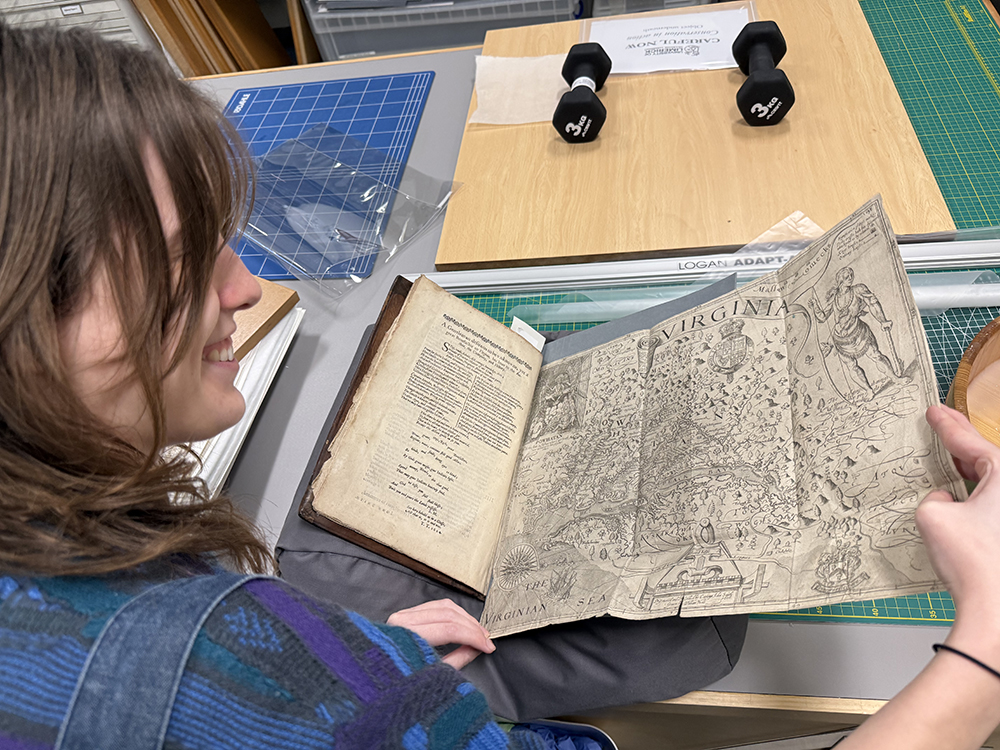
Although I entered my internship placement with previous experiences in the archives and collections management realm, this background formed a rudimentary appreciation of the practical skills required for working with historic assets and artefacts. When I started this opportunity, I had three goals in mind. First, my primary aim was to simply continue earning hands-on history experience with historic materials. Second, I wanted to learn more about how collections are organised and handled by Special Collections and Archives to better understand specific practices. And lastly, I hoped to further explore other pathways in handling and preserving historical objects, such as conservation.
My focus remained on the archives, with a foray into conservation. I assisted with two large projects throughout the semester. Though I have experience in filming and processing oral histories, my starting project of reorganising an oral history collection built upon this knowledge in unexpected ways. As I had to work with multiple formats of information, I realised how time consuming and detail-oriented archiving can be. Here, I recognised how important a step-by-step approach is. These thoughts continued into my second project, involving the initial organisational tasks of a newly accessioned collection. Assisting with this project felt more daunting. Not only were there significantly more items and information to process, but the organisational system had to be built through my observations of the objects and what contexts I could identify. I also became aware of the language of archiving. What I used to call making an organised inventory of items, I can now term ‘establishing intellectual control.’ I like to share this with my peers as a vocabulary flex!
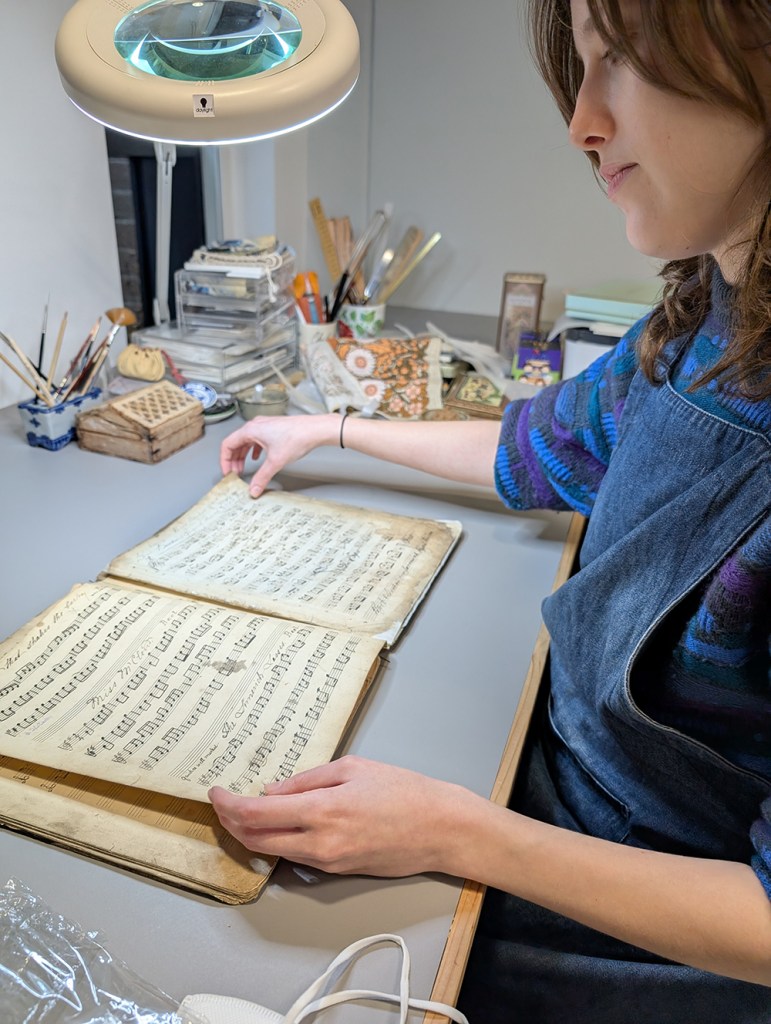
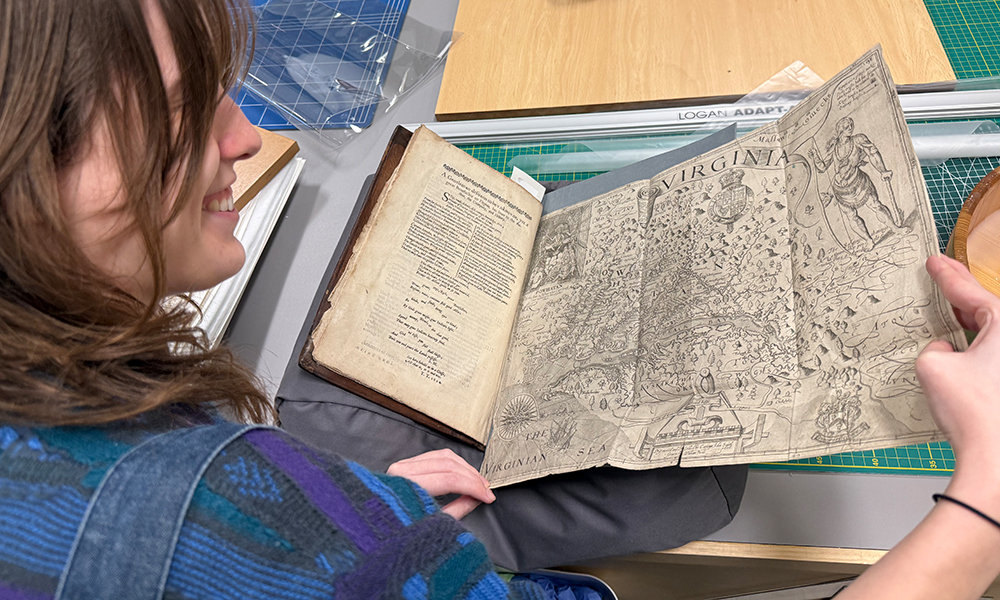
For my introduction to the world of conservation, I spent two days dedicated to learning the foundational skills. I received a comprehensive overview of a conservator’s responsibilities, from basic monitoring of exhibition display conditions to the active preservation and repairing of materials. Assisting with the repair of manuscript and paper artefacts was, to my mind, the perfect combination of art, science, and history into one discipline. The act of brushing away dust and dirt or pasting and adhering structural supports to a page of a music manuscript felt, to me, reminiscent of my scrapbooking hobby, just with the added reflection that I was participating in an act of conservation and extending this artefact’s lifetime. I was surprised by how slow at times this process could be, in waiting for objects to dry, but I could also accomplish so much in a day through these little projects. It was rewarding to have my progress manifest physically and see the change in the condition of an item into something more resilient.

These opportunities with Special Collections and Archives expanded my perspectives more than I could have imagined when I arrived in January. While my projects may have been small in scale compared to the scope of what the staff accomplishes full-time, what I accomplished with them feels immense in the impact it had on my understanding of what archives as a public history institution represent for historical practices. In such a brief time, I rediscovered how diverse the realm of history can be as a subject of study. Archives and conservation may have different methodological approaches to preserving the past, but they offered to me the same collaborative environment and space to work directly with projects that have an impact on future learning for students, researchers, and the public.

This internship challenged not only my academic and professional growth, but my personal growth as well. Alongside the new practical skills I picked up, my experiences with the Glucksman Library’s Special Collections and Archives taught me valuable life lessons I will continue to carry with me too. In archival and conservation projects, as in life, results are never immediate and may take multiple approaches before success is fully realised. We must be patient, trust in the process, and know that growth is gradual. My work here expanded upon my expectations and opened more pathways for me to consider. It is difficult to say if I enjoyed the archival or conservation pathway more, though I am sure I want to continue learning about both wherever history takes me next!

You must be logged in to post a comment.