
by Anna-Maria Hajba, Archivist
Join us on a journey from Calcutta to the Island of St Helena through the pages of a journal kept by Harriet Marshall between 9 January and 4 April 1847 on her way from Allahabad to County Tyrone. A weekly blog post series, running 10 January to 4 April 2025, presents transcriptions from her journal for the preceding week.
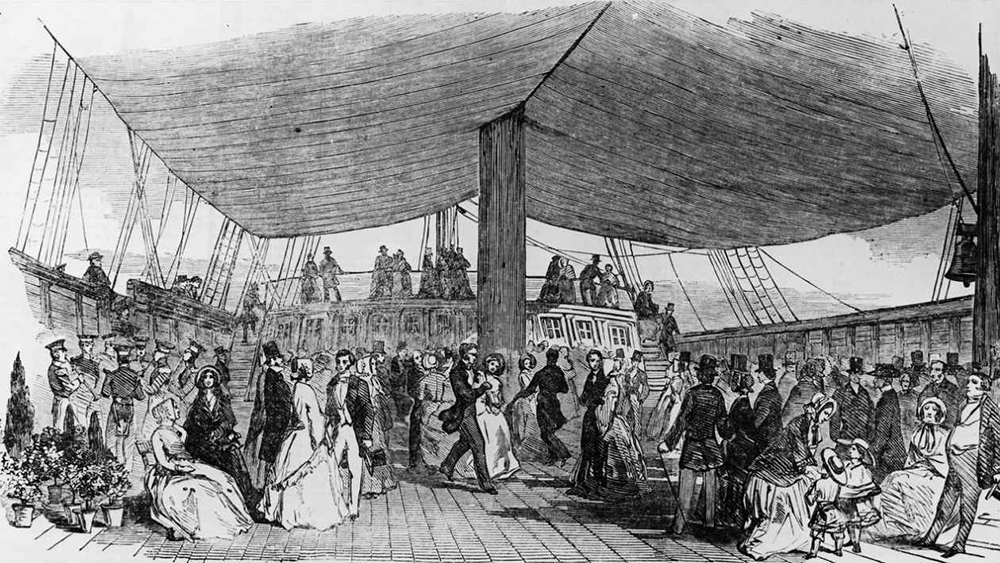
17th February 1847. Not much of a storm after all last night tho’ it looked very dark & threatening and it rained a few drops[.] all today has been very calm tho’ still very hot the evening was really delightful, the Captain1 proposed a dance which we of course were very glad of so the fidlers [sic] were sent for and we danced very merrily till a quarter to 9 O.C. three quarters of an hour more than the young gentlemen are allowed to keep up their dances, as a wind up we danced the Country dance[.] there was a strong mustering of Ladies for this last dance, even old Mrs Clerkson stood up & danced right merrily[.] this was to make up for the promised one of last night, I was much amused by the deference the young gentlemen paid to the little Captain, they would not dance till he expressly gave them leave to do so, they call him The Commander In Chief. I did not feel at all well today, heavy & out of spirits, I tried to work a tippet but did not do much, I came down to my cabin & wrote a part of my journal, thoughts & associations were recalling & I could not help bursting into a fit of crying, it was silly to give way but it did me good[.] I think this fit fortunately came on whilst the children were got dinner[.] Eliza2 had promised to look after Harry’s3 dinner, Bobby4 I kept away from the Table tho’ he is free from fever today for which I am very thankful & hope he may continue well all the voyage.

22nd February 1847. Monday. I have been very unwell for the last 2 days kept completely to my couch except at meal times, I was so weak & exhausted yesterday that Eliza went off & told the Doctor my complaints, without my knowledge[.] he has ordered me the shower bath every day[.] Mrs Wintle very kindly offered me the use of hers every day whilst the children were at Breakfast so now I shall be obliged to take a delightful shower Bath which I have been longing for every day, I took my 1st this morning oh how truly delicious it was, the feeling was heightened by knowing how very beneficial it will be for me[.] I am feeling so very weak that my limbs tremble under me.
The children are in very good health & spirits, Bobby has got a cough which I do not at all like, a number of other children have got the same[.] the Doctor says it is from their running about so much getting heated & then the cool breeze which blows every evening on deck. I rub his throat & chest with hartshorn5 & oil & have tied a piece of Flannel round his neck, & hope he may soon get rid of it.
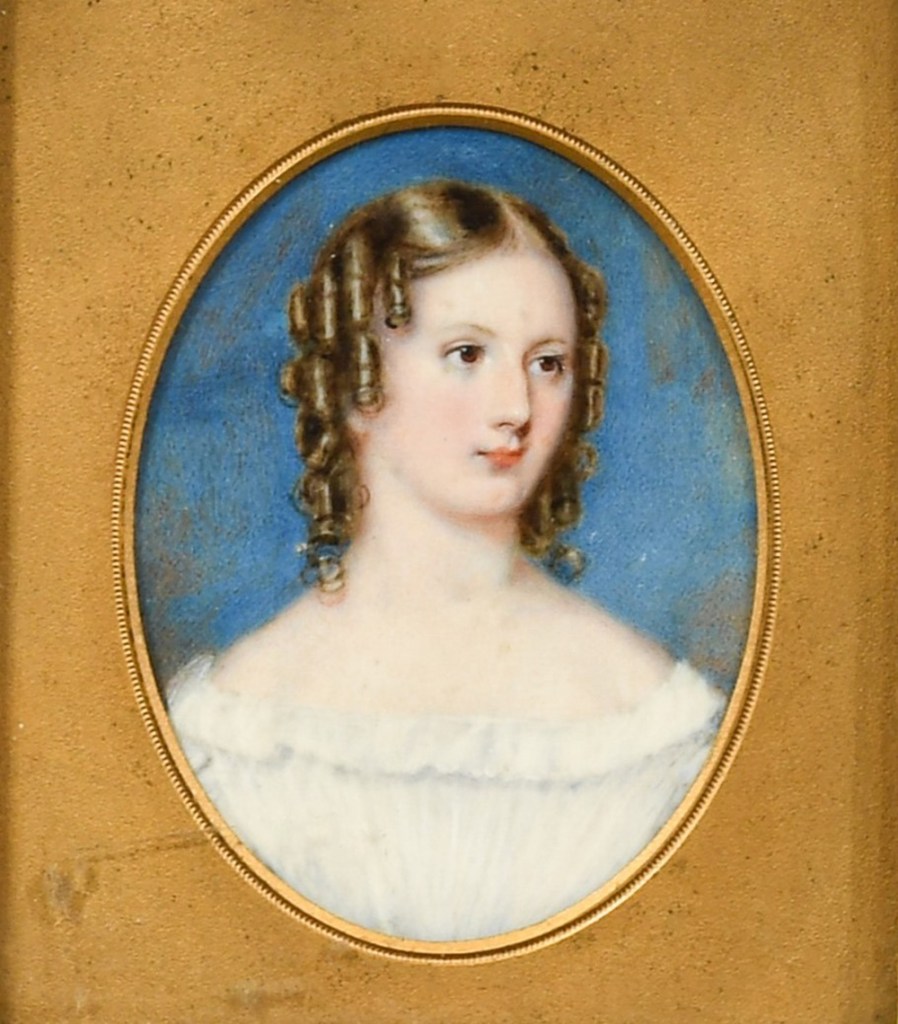
How very disagreeable it is that such a number of trifles will cause so many quarrels on board a ship[.] I suppose it is from their having nothing else to do, Lady Littler6 & Mrs Wintle are at cuts7 I learn, from having been confined to my bed I learn all my news from those kind enough to come & talk to me[.] Eliza has hardly left my side since my illness. A Birth took place 2 evenings ago[.] one of the soldier’s wives was confined of a little girl, the Father is a poor man who has been afflicted with blindness from a severe attack of Op[h]thalmia[.] he has been however able to distinguish objects dimly as through a haze since he came on board & is in great hopes that he will be nearly cured by the time he arrives in England. If so sea air has been the cure. I was quite surprised to find out by listening to some of Louisa (Eliza’s Portuguese woman) that she came out in my ship the Exmouth as Ayah8 to Miss Blackhall & Miss Boyd at the same time as we did, how strange to meet her again on the broad ocean. One meets with with [sic] people strangely and unexpectedly even in a ship at sea.
25th February 1847. For the last two days our Ports have been shut, constant squalls of wind & rain[.] the cabin was too hot for me to remain below so I have been wandering from cabin to cabin upstairs like a spirit, oh! how sincerely do I deplore my inexperience for not having taken a cabin above even if I had to pay a great deal more[.] the misery of sleeping in a steam bath for this is the atmosphere in my cabin when the Ports are closed, & the hatches also during a squall of rain, it cannot be wholesome, and it it [sic] will be worse when we get more the watery clime of England for then we shall get quantities of rain[.] I suppose we must bear all in the best way we can, & this shall never happen again to me I am determined[.]
We are getting on very [well] I hear, how sincerely I wish we were in a cooler latitude, tho’ from what I can learn we shall have 2 thirds of real hot weather & 1 third of cool.
A ship was in sight the day before yesterday bound for Madras[.] we made signals to her & found out her name was “The Lady Flora[”], how rejoiced I should have been if we could have sent some letters on board for India, a few words to dear Robert9 would have given him such comfort & me too, for there is some consolation in writing even if we cannot hear from a dearly loved one.

The dear children are progressing in their studies, Harry goes to the school master along with little Jimmy Wintle[.] they remain in school from ½ past 10 till 12 O Clock it keeps them out of mischief at all events.
Since I last wrote there has been a great to do between Mrs Wintle & Lady Littler, about their children, a great deal of exaggeration had been used in describing to Lady Littler by both Mrs Fisher10 & Mrs Reid some scenes that had taken place between Mrs Wintle & Hortense Littler11 who is the most malicious sly & wicked girl on board, it is too bad having allowed this great girl to grow up so wickedly, she tells dreadful falsehoods most unblushingly, & is disliked by all on on [sic] board, it is a great pity that Mrs Fisher & Mrs Reid demeaned themselves so much as they did, I had judged better of them but one must not judge by external appearances, I have been too unwell to know anything of this except by hearsay[.] I try to keep my children as much as possible out of all these petty squabbles, Board a ship certainly teaches more of life & its realities than any other place[.] here one never thinks of hiding their real character.
Captain Watt12 & Mr Consitt take great pleasure in revising discussions at one end of the table which reveals both their characters, & shew that even men will talk of things they don’t understand, I get quite angry at times at the way they talk, one is always abusing India & the other talks of music books & Poetry which he evidently knows only by name, I alway[s] try to turn a deaf ear to these disputes at table for they are really so stupid that one can not keep their patience.
26th The wind has been very fair we are running on splendidly. Colonel Moule & Dr Welsh have laid a bet, about the time of our reaching St Helena, the former bets that we shall be there on or before the 1st of April & the other says we shall not, every one on board hopes the Colonel may win, & so in fact does the Doctor himself.
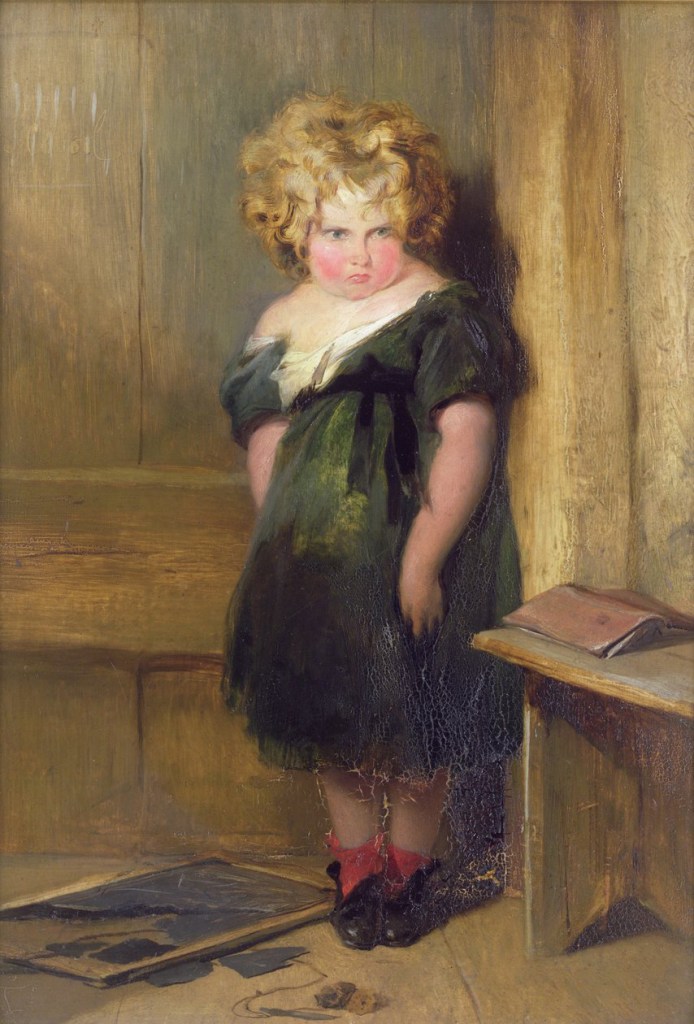
To shew how trifles are thought of on board a ship I must tho’ at the risk of being thought silly. My boy was playing with a paper Kite last evening on deck, he came crying to me that Hortense Littler had broken his Kite[.] I mended it for him & told him not to mind her, shortly afterwards both Bobby & Mrs Mason came & complained that Hortense had a 2nd time broken his Kite & that in a very malicious manner[.] I got up from my seat to speak to the girl, but found she had run away, at the first opportunity I spoke to her, & said everybody complained of her & if she teased all children again, I should complain of her, to her Mother, twice had she pinched my little Harriet, but I had not said a word to her, Mrs Moule was sitting by my side & I was reading & called this girl a short time after this scene[.] she refused to come & gave as a reason that Mrs Marshall was there so I turned round & said “well may you be afraid of me, for you are a coward, you can teaze little children but you dare not face me”

The tea bell rang for the children’s tea, Mrs Reid who was seated at the bottom of the staircase commenced questioning me about what Hortensia Littler had been doing so I told her the whole story, this is but one instance of how trifles are carried about & magnified on board ship[.]
Harriet’s journal has been digitised and is available to read in full on the UL Digital Library.
- Commander Alexander Henning (c. 1792-1871), captain of The Alfred.[↩]
- Eliza Madelina née Turner (1820-1890), wife of Captain James Don Kennedy (1806-1898).[↩]
- Harriet’s daughter Harriett (‘Harry’) Susan Marshall (1842-1926).[↩]
- Harriet’s son Robert (‘Bobby’) George Swayne Marshall (1841-1915).[↩]
- A preparation made from ground red deer antlers, which were a good source of ammonia; it was commonly used as smelling salts.[↩]
- Helen Olympia Littler née Stewart (c. 1809-1855), daughter of Lieutenant-Colonel Henry Stewart and Louisa Colebrooke and wife of Major-General Sir John Hunter Littler.[↩]
- Renounced each other’s acquaintance.[↩]
- Maidservant or nursemaid.[↩]
- Harriet’s husband, Dr Robert George Marshall (1813-1857), an army surgeon.[↩]
- Lucy Fisher née Vincent (b. c. 1805), widow of Captain John Fisher (1802-1846).[↩]
- Hortense Campbell Littler (1838-1867), one of Lady Littler’s daughters.[↩]
- Captain Edward Watt (c. 1802-1864) of the 6th Bengal Light Dragoons.[↩]

You must be logged in to post a comment.