
by Anna-Maria Hajba, Archivist
Join us on a journey from Calcutta to the Island of St Helena through the pages of a journal kept by Harriet Marshall between 9 January and 4 April 1847 on her way from Allahabad to County Tyrone. A weekly blog post series, running 10 January to 4 April 2025, presents transcriptions from her journal for the preceding week.
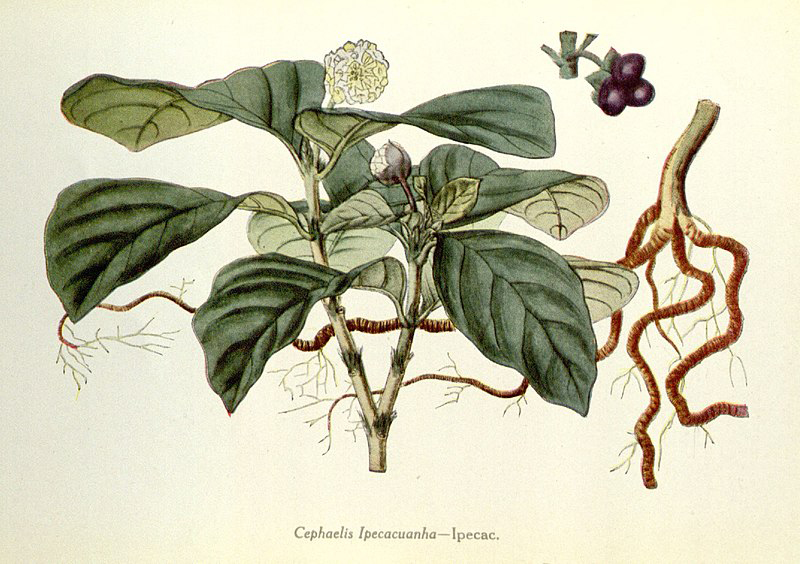
27th [February] Eliza’s1 Birthday she has completed her 27th year today. I was very busy the greater part of yesterday trimming a very pretty blue velvet cap with lace & ribbons & a cap for little Willy the Baby2 to be worn today but such is the instability of human foresight not one of those pretty things have been worn[.] the poor Baby has been & is dangerously ill with inflam[m]ation of the lungs, caused by a severe cold, I remarked the cough some two or three days ago, but Eliza said her children were always accustomed to get a cough when teething, however it turns out to be a severe cold which has settled on the lungs, I am very anxious about the dear little Infant, I can not forget how my own dear little Angel suffered & every time I listen to the wheezing noise that accompanies the breathing I cannot but recall the deathbed scene of my own little Mary.3 This child was suddenly attacked with a violent fit of crying, as if in pain, I gave it a dose of Dalby,4 which seemed to revive it a little[.] in a short time he commenced the crying again[.] the Doctor was passing so he gave a dose of Castor Oil & a warm bath, then he heard the wheezing & knew the danger, at 5 O.C. he gave some calomel5 & James’ Powder,6 at 7 O.C. he applied 2 leeches to the instep of the right foot, & then another dose of calomel then towards morning Ipecacuan[h]a wine7 & water. The poor child was very restless all night, & feverish, this shews me how very careful one ought always to be with coughs, however slight they ought to be attended to without delay.
I was talking & laughing with Eliza about our Birthdays, she asked me how old my Robert8 was, I said he had completed his 34th year on the 21st Inst, she laughed & said “well I quite forget his age & whenever anybody asked me his age, I always said he was 27 years old this was the age he was when I first knew him & have never thought of adding to his age”. She would wish the world to stand still by her calculations & so I dare say would a number of others in this world.
28th February 1847. The last day of the month, & our 4th Sunday on board. I went on deck to Prayers, for the first time[.] Mrs Henning9 was the only other lady, the others were all afraid of the glare but I did not find this inconvenient enough to put down my veil even[.] there was a delicious breeze, I left the children to play on deck after Prayers but they would not remain there long after I came down, for the last 4 days we have been going upwards of 200 miles a day, the only disagreeable to me is, our Ports being shut, but there is a splendid breeze brought down by the wind sails, I quite enjoy sitting opposite Eliza’s cabin, reading, writing & working all day long[.] our cabins are pretty cool at night, so much so that we can use a light covering at night.
The Baby Willy is still in a dangerous state today, his breathing is still accompanied with that fatal noise, & a slight fever attending, God grant he may be spared to be a blessing to his Parents, poor Eliza has already suffered enough from the loss of children. Dr Welsh is very kind & seems to sympathise for the feelings of the Parents by his manner[.] he does everything with his own hand, & is constantly coming to the door to see how the Baby is getting on, what a life a Doctor must lead on board ship, so many to attend to & so many curious characters in the bargain, & then people fancy themselves quite at Death’s door from a slight sea sickness whereas if they would but exert themselves this feeling would go off by mere exercise[.] I have no sympathy with people suffering from sea sickness, as I have been lucky enough not to feel even slightest uneasiness from the incessant rolling of the ship
1st March 1847. The Baby was much better by last evening, slept soundly & quietly, during the greater part of the night & now looks today somewhat more like himself. Eliza was kept in agony nearly all night from a fearful headache, it was so distressing to see her, & to know that I could do nothing for her, she is very much better today.
I have been very busy the greater part of the day putting my drawers to rights, emptying a Trunk of clean clothes & packing all the dirty linen into it, preparing to put it into the Hold tomorrow.
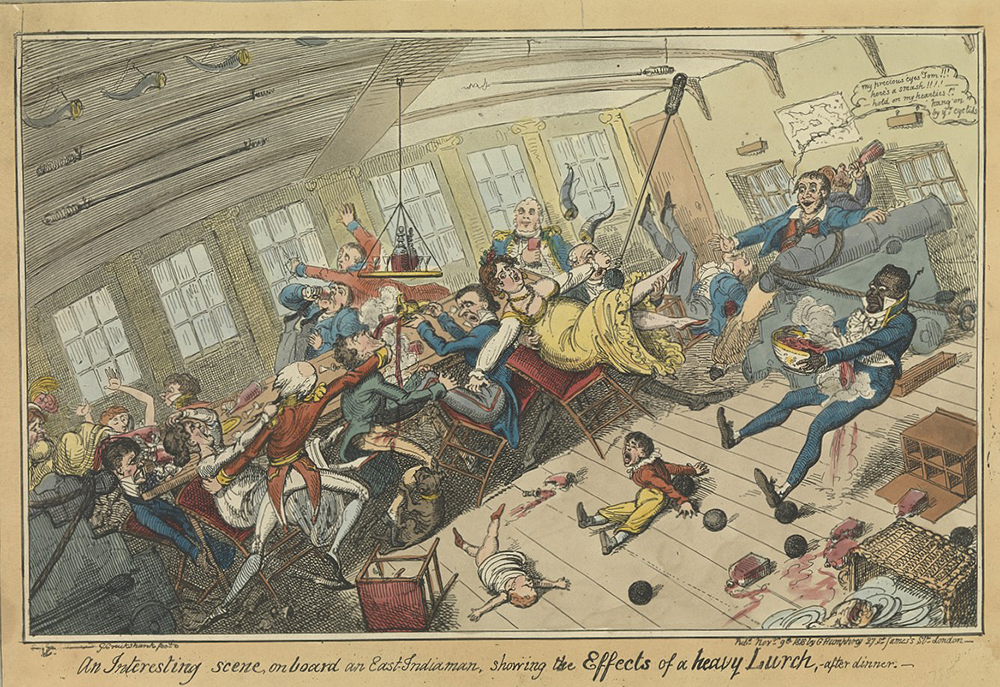
I had the Port open for a short time to air the cabin but the spray of the sea coming in warned me to shut it. The wind Is favorable [sic] & what the sailors call a smooth sea, which I do not however, as I can not have my Port open[.] there is one consolation nonetheless that we are going 8 or 9 knots an hour the faster we go, the sooner our journey will be over and the sooner I shall receive letters from all those I love best, it is now one whole full month since I heard from dear Robert[.] how I long to know how they are all getting on at my own home, dear Mary,10 I wish you were as happy as I could wish all I hope is that if I live to return to Allahabad I may still find you unchanged, how delightful will be our rides again[.] I shall be more of a companion for Robert too, & shall be able to tell him tales of his Parent’s11 home, a visit to which, I cannot help feeling I have in a great measure deprived him of, poor dear Robert how your warm heart would have enjoyed to have pressed the land of your birth once more, God grant that our fondest dreams may be realized of going home in 5 years hence. It is a delightful morning now[.] I must now go up on deck to breathe the sea breeze which I begin to think is giving me a renewal of life & spirits[.] I felt I had a colour today during the dinner the first I have ever felt since our voyage down the River in the steamer.
2nd March 1847. Tuesday. Another busy day, as it is Baggage day, it was very lucky that I had my Trunk up, as I found 2 corners, & a part of the part of the [sic] top wet[.] my dresses fortunately were in the centre so they escaped, the box was kept in the steerage near the midshipmen’s berth so it was sheer carelessness that my Trunk got wet.
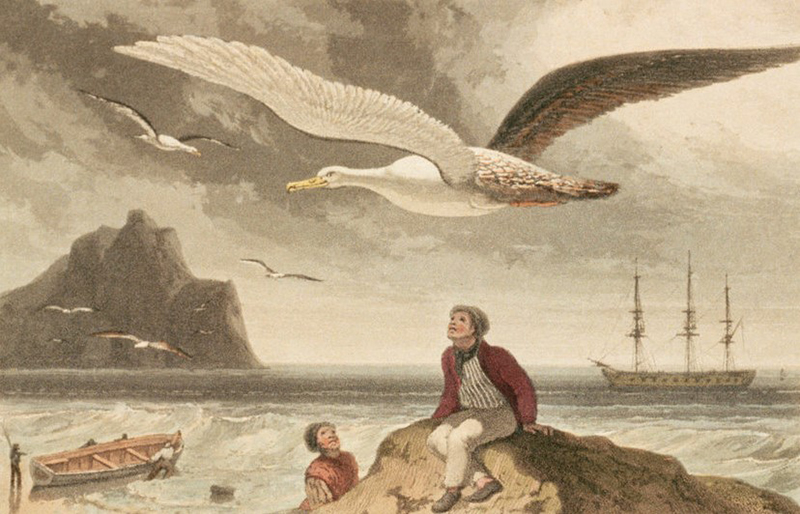
The first Albatross was seen early this morning. Colonel Moule told me the Captain12 hoped to be nearly round the Cape then it is 10 or 12 days run from thence to St Helena[.]
3rd March 1847. Wednesday How little can we depend upon sanguine people’s reports. Last evening the Captain said it was more likely we should be 20 days rounding the Cape, I was made quite buoyant with the hope that in 20 or 22 days we should be at St Helena, & then I might have a chance of writing dear Robert[.] perhaps after all the little Captain must be shamed for raising my hopes, or Colonel Moule is too anxious to reach St Helena, we have made up a party to go on shore then.
Our Ports were open & shut at intervals yesterday, sufficient to give our cabins fresh air without water being let in.
I walked a long while last evening, too much for my strength I think, as I do not feel at all well today[.] I take a shower bath every morning regularly & enjoy it very much[.]
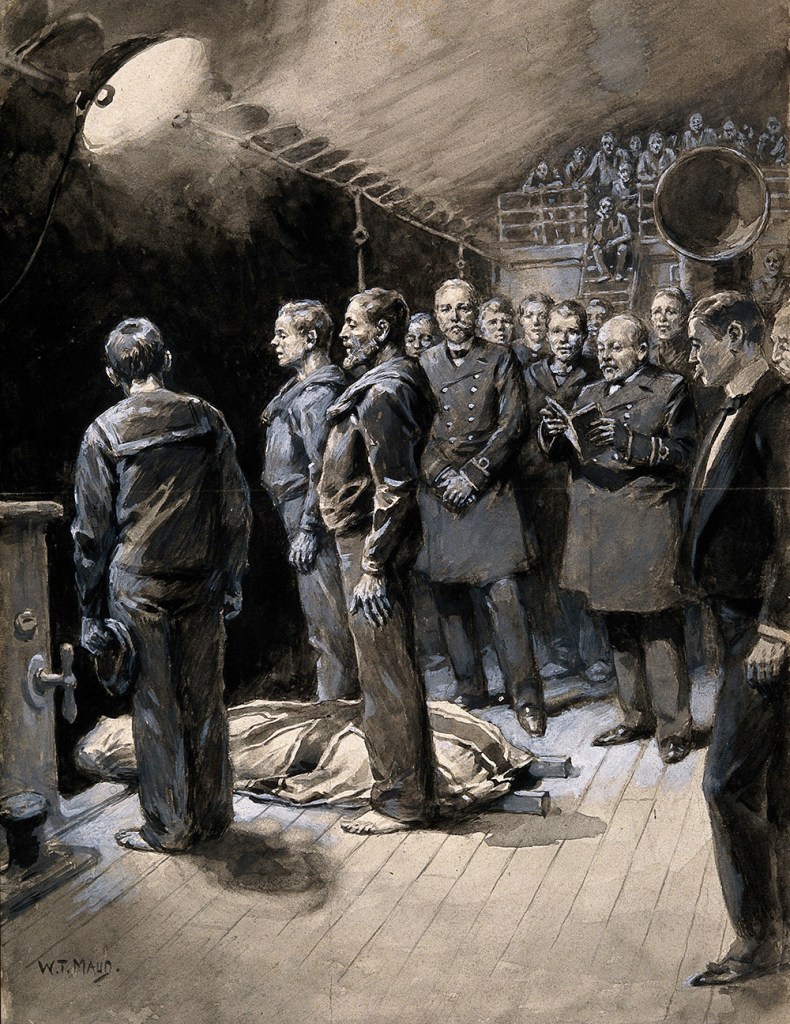
Another of the Invalids died the night before last & was buried at noon yesterday, I did not know that Death had been busy amongst us again till someone told me that the bell was tolling for the funeral[.] such is life, tho’ to the poor man it must have been a release from perfect misery, he was quite a young man & had only been a year in the service. We have had the steerage [—] [—], it was only made quite clear yesterday, all is now clean & nice, we could dance now in our Drawing room, as we the steerage.
Mrs Mason says I think so much of dear Robert that she is often awoke from a sound sleep by hearing my voice calling out his name in my sleep, I often dream of him & once awoke myself by thinking he was in my way & prevented my turning in my cot & then I found that the side of the cot was in my way all the time.
Harriet’s journal has been digitised and is available to read in full on the UL Digital Library.
- Eliza Madelina Kennedy née Turner (1820-1890), wife of Captain James Don Kennedy (1806-1898).[↩]
- Eliza Kennedy’s youngest child, William Turner Kennedy (1846-1890).[↩]
- Harriet’s third child, Mary Sophia Marshall (b. 26 November 1843), had died of whooping cough on 9 April 1846.[↩]
- Dalby’s Carminative was a popular patent medicine given to babies and children suffering from stomach and bowel disorders; its main active ingredient was opium.[↩]
- Mercurous chloride, used as a purgative.[↩]
- Invented by the English physician Dr Robert James, James’s fever powder consisted of antimony oxide and calcium phosphate.[↩]
- Ipecacuanha was a drug that contained an extract made by soaking the root of carapichea ipecacuanha, a plant native to South America, in water or alcohol. The extract was then added to medicinal wines or syrups in small doses to induce sweating and aid the clearance of mucus, and in large doses to induce vomiting.[↩]
- Harriet’s husband, Dr Robert George Marshall (1813-1857), an army surgeon.[↩]
- Melina Henning née Smith, wife of Commander Alexander Henning (c. 1792-1871), captain of The Alfred.[↩]
- Harriet’s sister, Mary Swayne (1831-1872); she married Charles Mordaunt FitzGerald in 1850.[↩]
- Robert’s parents were the Reverend Cornelius Henry Marshall (1770-1854), Rector of Killeshil, County Tyrone and Margaret née Brydge (1779-1847).[↩]
- Commander Alexander Henning (c. 1792-1871), captain of The Alfred.[↩]

You must be logged in to post a comment.