
by Anna-Maria Hajba, Archivist
Join us on a journey from Calcutta to the Island of St Helena through the pages of a journal kept by Harriet Marshall between 9 January and 4 April 1847 on her way from Allahabad to County Tyrone. A weekly blog post series, running 10 January to 4 April 2025, presents transcriptions from her journal for the preceding week.
4th March 1847. Thursday
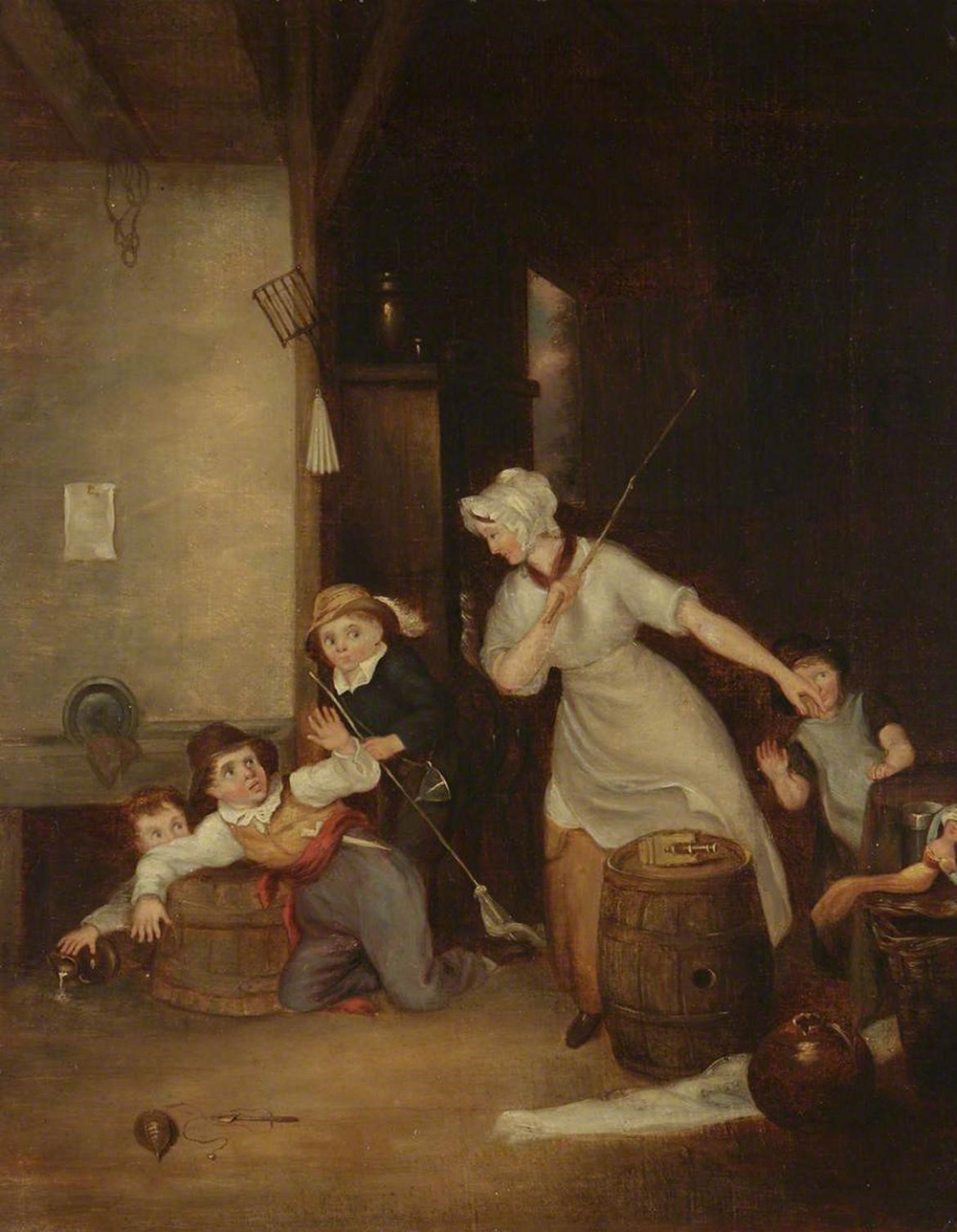
Shortly after I had closed my journal yesterday I continued sitting in the steerage, Eliza1 was opposite to me, & no one else was in sight, suddenly we heard a child’s cry, Eliza jumped up saying “There’s Willy2 [—] again”[.] I knew the cry & said “Oh no! it is not Willy but that nasty child”, & then stopt [sic] trying to recollect the name when out bounds Mrs Newhouse3 from her cabin[.] “nasty child” she said[, “]he is not more so than any of yours, I suppose he has clothes to wear as well as yours & what do you mean by calling him nasty”[.] she had recognised the cry of her little boy Henry,4 whom everybody on board calls a nasty child tho’ I have been as yet the only one that has called it so in her hearing, I did not know she was in her cabin, & would have said the same of any other child, I stared at the woman in astonishment at first but when she went on grumbling & getting impertinent I said as calmly as I could “Why Mrs Newhouse I would have called any child nasty for crying & so he is a nasty child for doing, & as for wearing clothes that will not make the child good or bad but as I have no wish to be quarrelsome I beg you will stop quickly[?]” after saying thus my blood was boiling & I did not know what I might not have said[.] I walked into my own cabin, I have allowed my servant Mrs Mason to go to her [Mrs Newman’s] cabin after Breakfast & to help her to put it to rights as I really pitied the woman with no one to help her to attend 3 children, she is not a Lady by birth or by education[.] the Captain5 has not even introduced her to us, she speaks bad grammer [sic] & uses bad language when she is excited, I was the only one who had any pity for her, all the others say she would have been only a servant had not her Husband6 married her & been successful in some sugar manufactory, but after yesterday’s impertinence for I can give it no other name, she beats her children most unmercifully with a cane but I must do her the justice to say that they richly deserve it.
We were out of the influence of the Trade winds some time during the night of Tuesday last, we have been very lucky however in getting pretty fair but rather variable winds since, I heard the Captain say that we are 7 days ahead of last year’s voyage home, I hope we shall gain 1 more then we shall be in England in exactly 3 months & a half, this will [be] a very fair passage oh! how delightful the anticipations of reaching England & seeing dear Robert’s7 family, I often build castles in the air of the meeting with John8 he will be the first I suppose that I shall see, I wonder what he will think of his younger Brother’s wife[.] I should so much like to have a peep into their first letters to Robert & see what they write to him of me[.] at present I can only amuse myself with castle building.
5th March 1847. Friday.
Last evening we got up a small dance, Mrs Clerkson Mrs Henning,9 Mrs Wintle & myself, the Boatswain will only play for us Passengers & not for the Midshipmen, he is the best fiddler on board so is rather surly & makes a favour of playing, so the young gentlemen can not get a dance of which they are very fond without we can manage to get up one amongst ourselves. I have been hard at work all day downstairs sitting near the windsail cutting out 6 collars for Mrs Wintle & sewing on lace to one for Eliza, the Baby is daily improving I am happy to say, one tooth is near through. What a little jealous thing Mrs Watt10 is, this feeling shews itself in numberless trifles[.] one instance happened yesterday Captain Watt11 & Colonel Moule play at ecarte,12 but each had promised to give it up if Mrs Faithfull13 would work a cap which she promised to do[.]
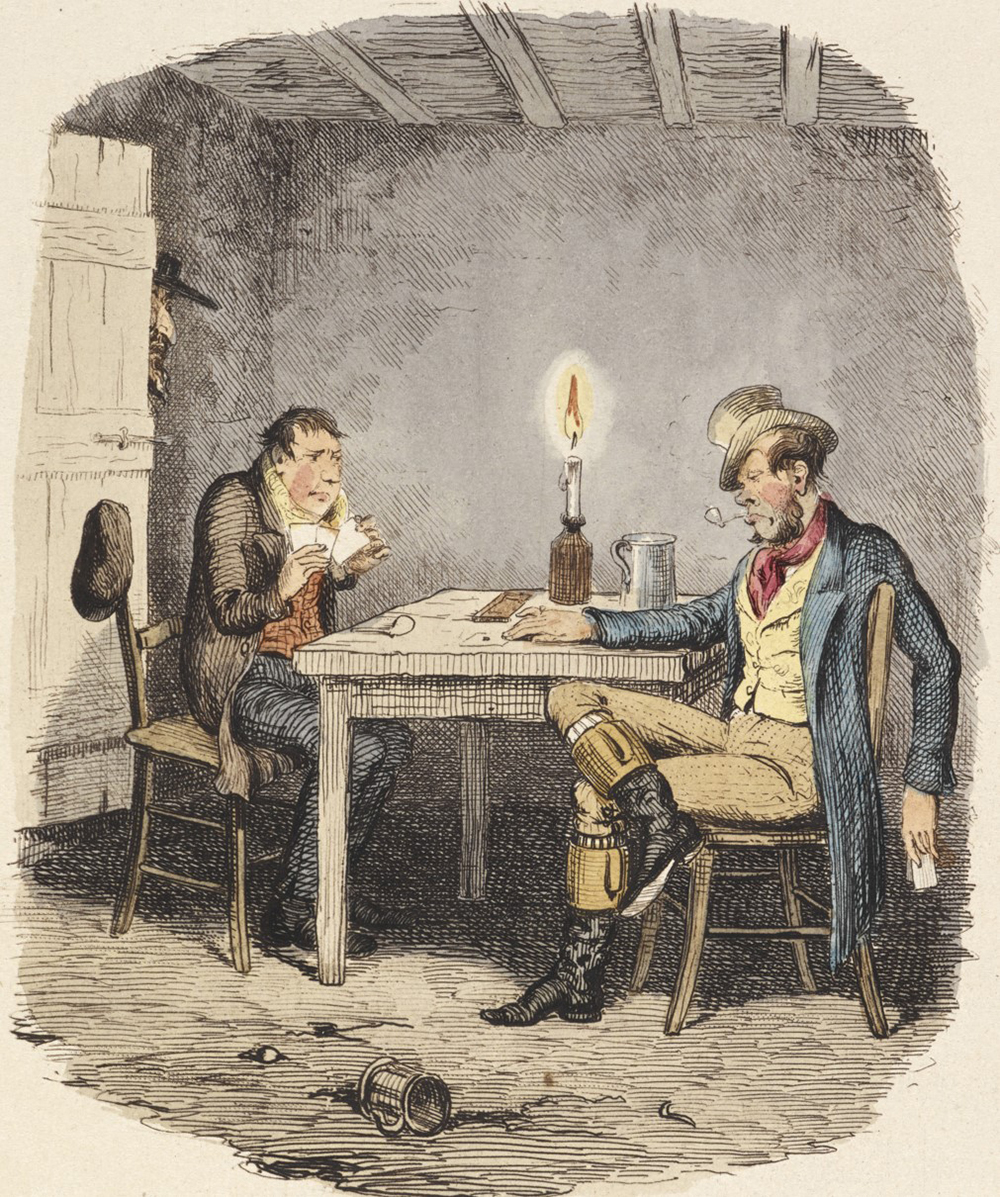
yesterday Mrs F. had a knitted cap of Jimmy Kennedy’s14 lying by her side, she asked him if he liked it, Mrs Watt instantly said “oh! I can work one like that & I’ll do it”[.] Captain W. said [“]no! no! Mrs Faithfull has kindly promised & she must do it”[.] “That she shall not & I will work one for you[”.] Mrs F. instantly said “Since Mrs Watt does not wish it I will not do the cap”[.] after this the Husband & wife must have had some words for in the Evening Mrs Reid stopped Mrs F. & told her not to mind what Mrs Watt had said but to go on with the Knitted cap, now Mrs Reid was not in the Cuddy at the time that the discussion took place so Mrs Watt must have told her. Well another instance took place today[.] Mrs Watt came down to her Husband’s cabin to feed the Parrots with bread[.]
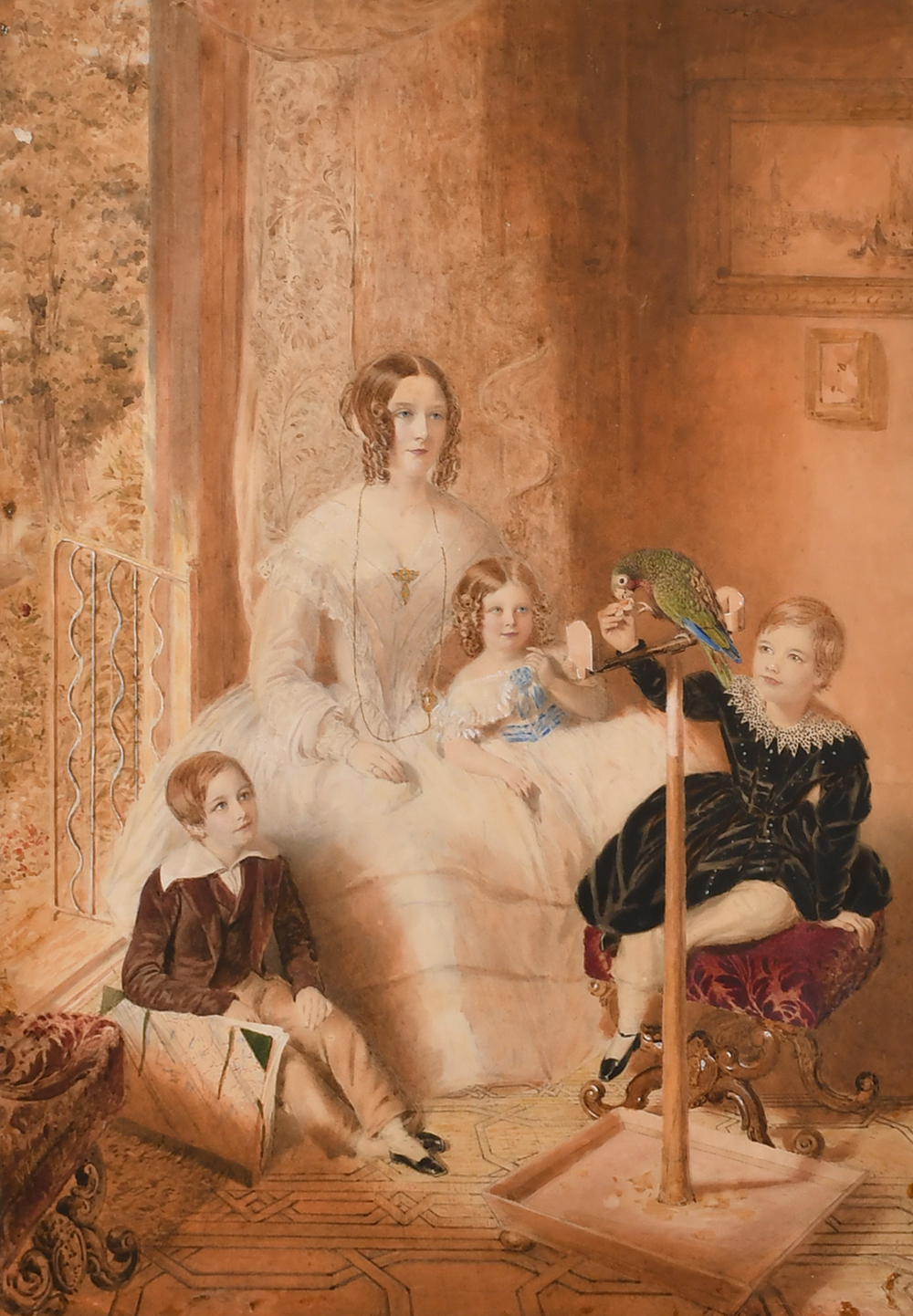
my boy15 was in the cabin looking at the birds[.] I came down shortly afterwards to my own cabin but seeing Mrs W. I stood at the door talking to her when Captain W. came down[.] I moved away when he said “come into my cabin my good lady[”] so in I walked, I was going to take my seat on a chest in the room when he said [“]oh! don’t sit there here is a much more comfortable place”. Mrs W. said [“]oh! she does not wish to sit in your cabin she has a much more comfortable one of her own”[.] this was an uncalled for remark as I had shewed no disinclination to sit & it gave me an idea that I was not welcome there. People little think how an unkind however trivial the remark may be is recollected, she would be kindness itself to me if we were alone but she cannot bear the slightest attention to be shewn by her Husband to any one in her presence.
7th March 1847. Sunday.
I did not write my journal yesterday being prevented by having the ill luck to fall out of my swing cot the night before last, I had got into bed & leant a little to the side in speaking to Eliza who was in the next cabin trying to put her Baby to sleep when suddenly looing my balance I was cast most unexpectedly and suddenly on the deck with the Bedding & clothes all on me[.] my servant called out which caused Eliza to rush into my cabin[.] I lay in speechless agony for about 10 minutes the horrible thought of both my collar bone & my arm being broken came over me[.] the idea of the operations to be performed in putting those again made me feel quite faint & sick & exagerrated [sic?] the pain I suppose[.] after a little time Eliza had rubbed all along the area with Brandy & Laudanum & I had felt with my other hand that what I so much dreaded had not happened.
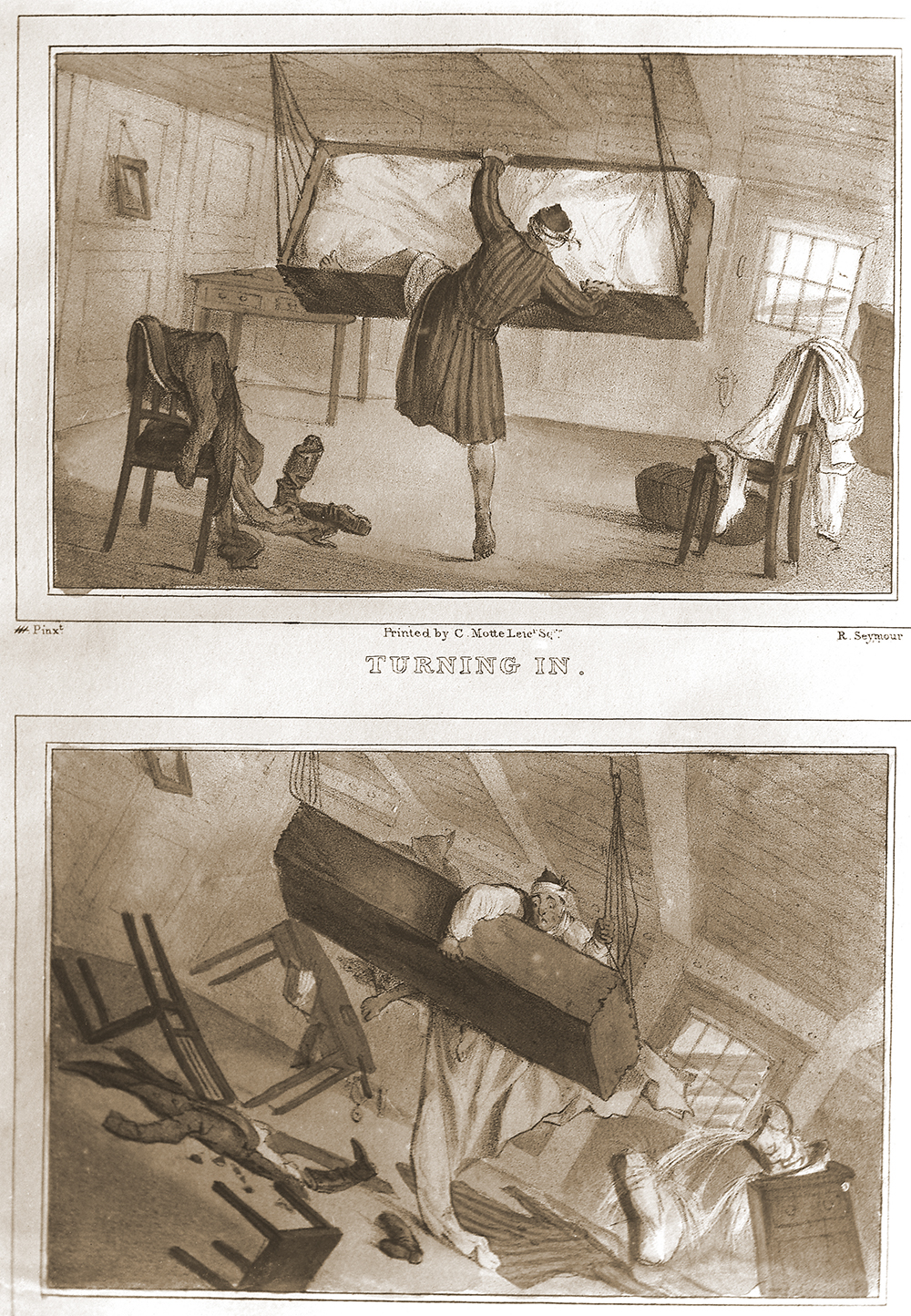
Eliza fomented & rubbed the area for an hour & a half[.] she left me to try & go to sleep on the deck where I intended always to sleep in future, there was a good storm of rain on this unlucky night but after all it was rather a calm yesterday, we had our Ports open all day which was a real blessing as I was obliged to keep my cabin the greater part of the day & did what I never hope to do again & that was taking my Breakfast in it. I managed to dress for Dinner in a fashion, I really cannot make out how ladies can manage to eat & enjoy their meals in a close cabin.
The young gentlemen put up a dance last evening amongst themselves, as it was a fine calm night with very little wind I allowed the children to remain up on deck to see the dancing, Harriet16 tried to dance the Polka, how pretty little girls look in dancing among themselves, the 2 little Miss Fisher’s got up & waltzed together[.] they really looked very pretty & graceful.

Harriet’s journal has been digitised and is available to read in full on the UL Digital Library.
- Eliza Madelina Kennedy née Turner (1820-1890), wife of Captain James Don Kennedy (1806-1898).[↩]
- Eliza Kennedy’s youngest child, William Turner Kennedy (1846-1890).[↩]
- Bridget Newhouse née King (1815-1885), wife of sugar manufacturer George Newhouse (1795-1859).[↩]
- Henry James Newhouse (1843-1882), son of George and Bridget Newhouse.[↩]
- Commander Alexander Henning (c. 1792-1871), captain of The Alfred.[↩]
- George Newhouse (1795-1859), a sugar manufacturer in Calcutta.[↩]
- Harriet’s husband, Dr Robert George Marshall (1813-1857), an army surgeon.[↩]
- Harriet’s brother-in-law, the Reverend John Marshall (1802-1858), a Royal Navy chaplain.[↩]
- Melina Henning née Smith, wife of Commander Alexander Henning (c. 1792-1871), captain of The Alfred.[↩]
- Elizabeth Watt née Worsley, wife of Captain Edward Watt (c. 1802-1864) of the 6th Bengal Light Dragoons.[↩]
- Captain Edward Watt (c. 1802-1864) of the 6th Bengal Light Dragoons.[↩]
- Écarté = a trick-taking card game for two players popular in the nineteenth century.[↩]
- Louisa Sophia Faithfull née Wilson (1826-1858), widow of Lieutenant Henry Jacob Young Faithfull (1823-1846).[↩]
- Eliza Kennedy’s eldest child, James Edward (‘Jimmy’) Kennedy (1841-1865).[↩]
- Harriet’s son, Robert (‘Bobby’) George Swayne Marshall (1841-1915).[↩]
- Harriet’s daughter, Harriett (‘Harry’) Susan Marshall (1842-1926).[↩]

You must be logged in to post a comment.