

by Anna-Maria Hajba, Archivist
Join us on a journey from Calcutta to the Island of St Helena through the pages of a journal kept by Harriet Marshall between 9 January and 4 April 1847 on her way from Allahabad to County Tyrone. A weekly blog post series, running 10 January to 4 April 2025, presents transcriptions from her journal for the preceeding week.
January 1847
9th I ought to have bought this book long ago, so as to commence my Journal with the new year but as I only arrived in Calcutta on the evening of the 6th, I could not very well do so. My Passage down the River in the Matabangah flat1 occupied seventeen days from Allahabad. I had a lonely Passage, the only Passengers beside myself & children2 being a little girl named Elizabet Martin an orphan going to her Grand Parents in Scotland, and a European servant a Mrs Milner, a very quiet respectable & respectful woman, who came down to go home with a Mrs Gubbins of the Civil Service. Then I must not forget that a civilian came from Patna to Banghalpore3 with us, but he only remained two days aboard, and was not very sociable. The Commander & his wife, the Kingdoms4 were polite and attentive the whole way, Mr Kingdom was born and educated a Gentleman, but his wife was only a Conducter’s [sic] Daughter, however I am very thankful for their attention to me, when they might have treated me indifferently, & I could not have complained[.]
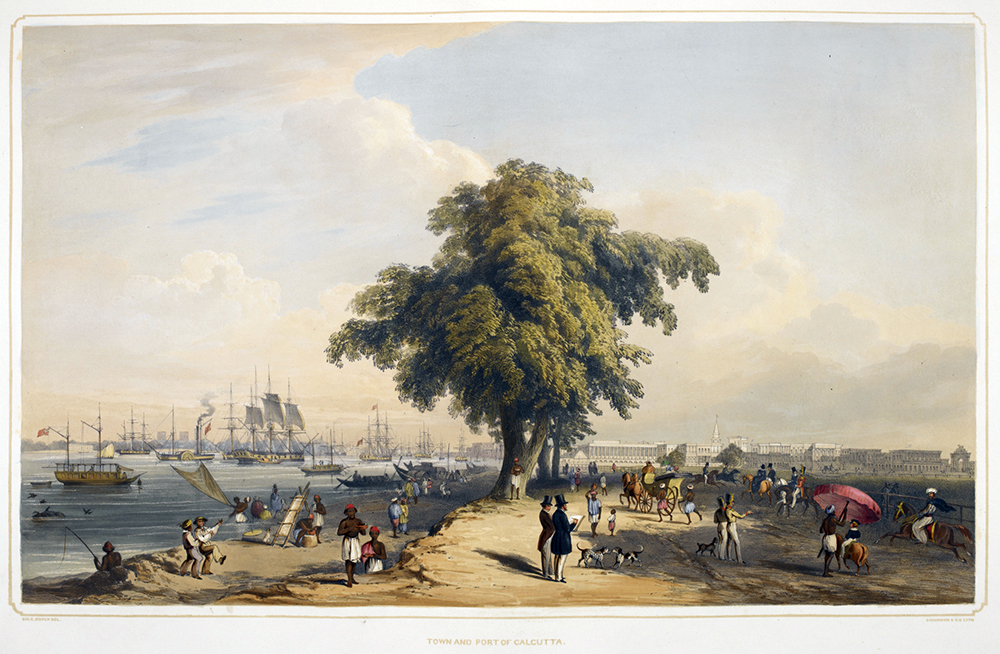
In coming in sight of Calcutta it would be vain to try and reduce my sensations to words, for there were more than I could ever express, I looked on each Noble Ship as old freinds [sic] whom I had not seen for nearly 8 years[.] I had left Calcutta a child and returned a Woman and a Mother, how little had I fancied when I bade it farewell that I should return thus. I looked on each well remembered Building with a rush of feelings, they recalled those who were with me when I was here last, one dearly loved sister5 now mouldering in her grave, my mother6 left behind and I who had fondly hoped to have revisited these scenes with the Husband7 of my choice on our happy way to England, compelled by stern necessity to come back alone, and two young children to protect, I could have sat down and cried bitterly[.] as soon as we anchored I longed to go on shore and find my way to the Cavanagh’s House, I fidgetted [sic] myself till I got a dreadful throbbing Headache[.]
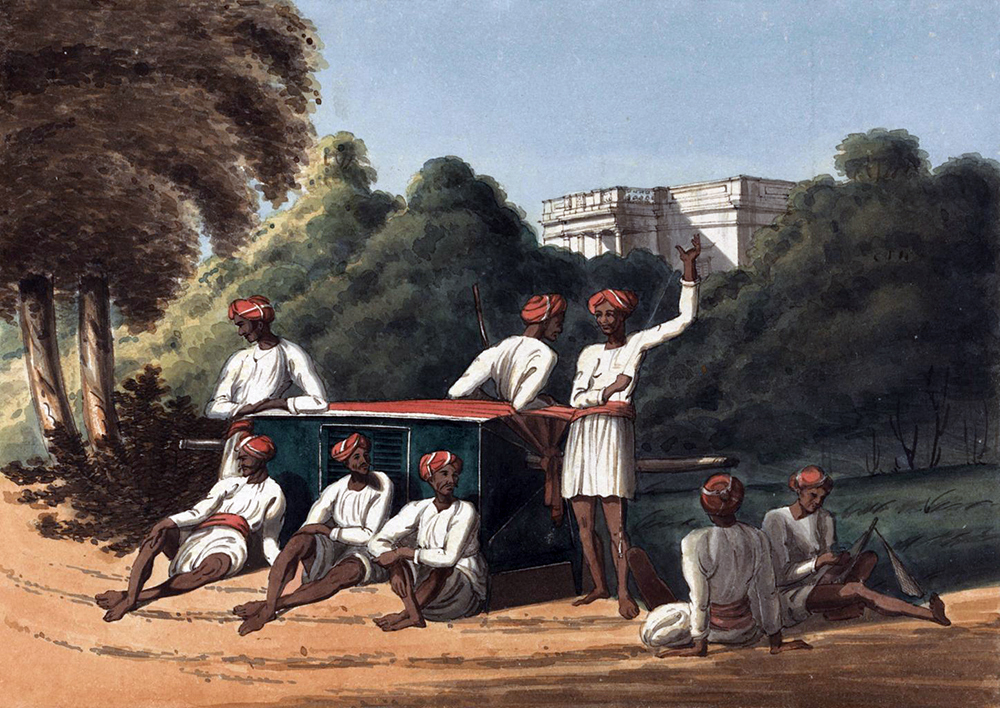
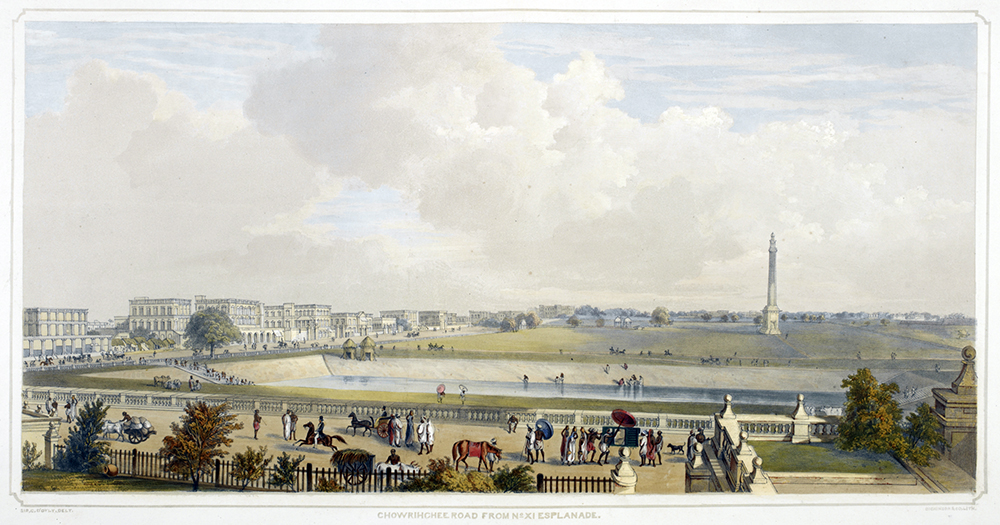
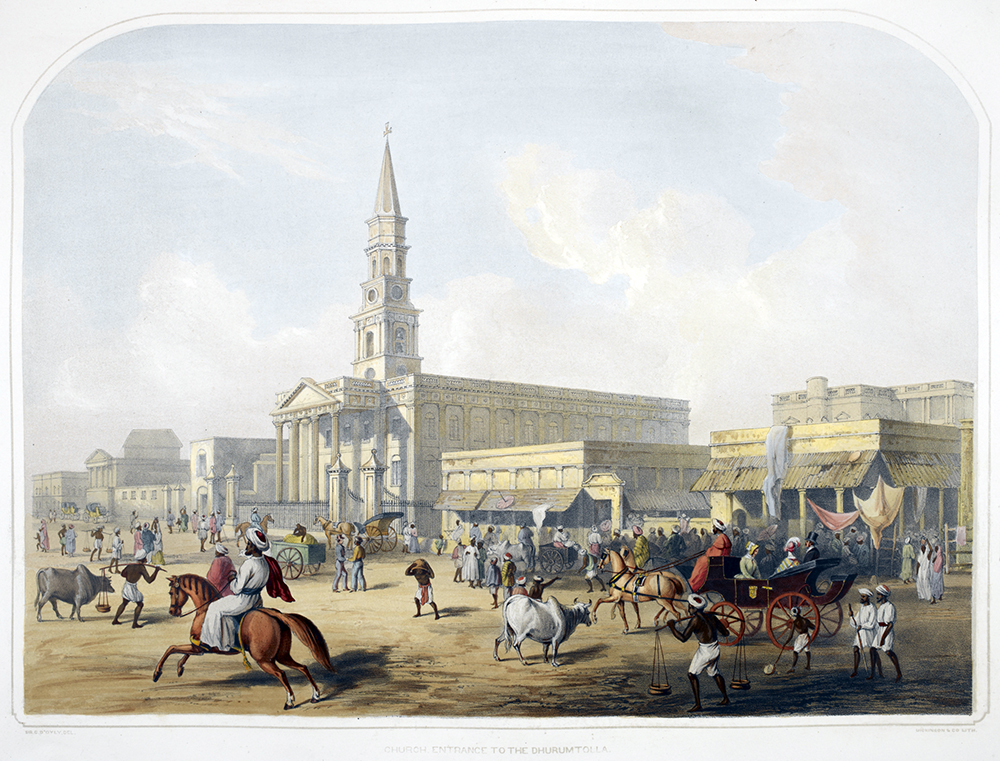
After dispatching a messenger with a note announcing my arrival I would have given worlds if I had then to have got my Letters, I had not heard from dear Robert since his departure at Benares from me, nor from my sister Mary8 since his return to Allahabad, I waited impatiently enough, till a ¼ past 7 O.C. P.M. and then hired a Palki9 and with the children and a slam bundle, determined to find the Cavanagh’s10 House[.]this was not such an easy affair, as I cannot speak the Bengallic language, so the Bearers took me down to Durhumtollah11 instead of Chowringhee Road, however by ½ past 8 I found myself at my destination, and such a delightful packet of letters, I sat up reading them till late at night, & even when I did go to sleep I could not sleep, the noise and novelty excited me[.]
The following morning I went down on board the Matabangah and got off all my things[.] came back settled my room dressed Breakfasted wrote Letters and heard the children’s lessons, slept soundly all night of the 7th and awoke refreshed and gave orders for Shoes to the Chinaman, called on Miss Smith, an old friend who I was glad to find recognised me instantly after my long absence from the place, came back & thinking Mrs Cavanagh was in the sitting room walked in & found a young gentleman trying to amuse himself till their return as they had gone out visiting, I sat down, and to my amusement chatted away with the unknown for about an hour or more & when he rose up to go we shook hands heartily and I laughingly said I will tell Mrs Cavanagh that you called, if you will tell me your name[.] he laughed and said I am Mr Vincent, my friend is an Irishman and a son of General Vincent’s, I was so amused with myself & Mr Vincent too, for I kept wandering who he was, he had the advantage of me, as being a friend of the Cavanaghs he knew who I was, and told me so. We talked on every subject except Law & Politics! Books Races Betting matches, the different stations, we each had been at, our Voyages, the people we knew in different corps[.] Just as Mr Vincent went away a card announced the arrival of Mr Macdonnell of the 40th, whom I had known slightly at Allahabad, he had seen my arrival in the Papers, and called, I was vastly amused at his very coolly telling me that he had fallen in love with my sister Mary from a glimpse he had of her on the Barrackpore Road last June, and that he still retained his Penchant for her, I believed him of course! A Gentleman of his susceptible temperament must be always falling in and out of Love[.] after his Departure we dined went out for a drive, and when we retired for the night I sat up writing a long letter to my Robert which I only closed today at 4 OC. P.M.
9th Went out shortly after Breakfast to the Exchange to make purchases for my long sea Voyage[.] it is a great comfort that all our Outfits are ready for I am sure I should not know how to set to work here[.] from thence to Pittar Lattry and then back, a short time after my arrival Captain Kennedy12 was announced[.] I was so glad to see him I accompanied him to see Eliza,13 who I found very much improved in looks since I last saw her, they gave me the welcome news that my Passage was taken in the glorious ship Alfred for Rs 1,300 very much cheaper than I ever expected so I shall have £30 to land in England with extra[.] The Alfred does not sail till the 28th, I wish our departure were earlier as the sooner I leave the sooner I hope to be in England[.] I was able to give this satisfactory news to Robert when I came back from having seen Eliza. I had written to Jimmy14 this morning before Breakfast but had wafered15 his letter, I must write him again very soon, it is a pleasure writing to all our loves and to those who we know love us.
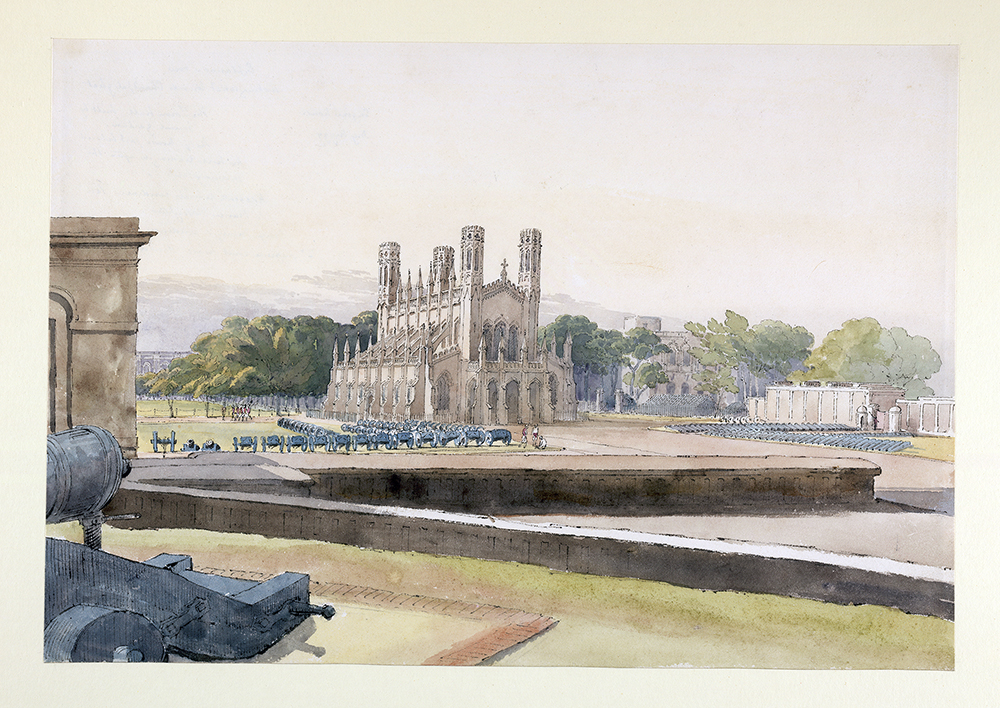
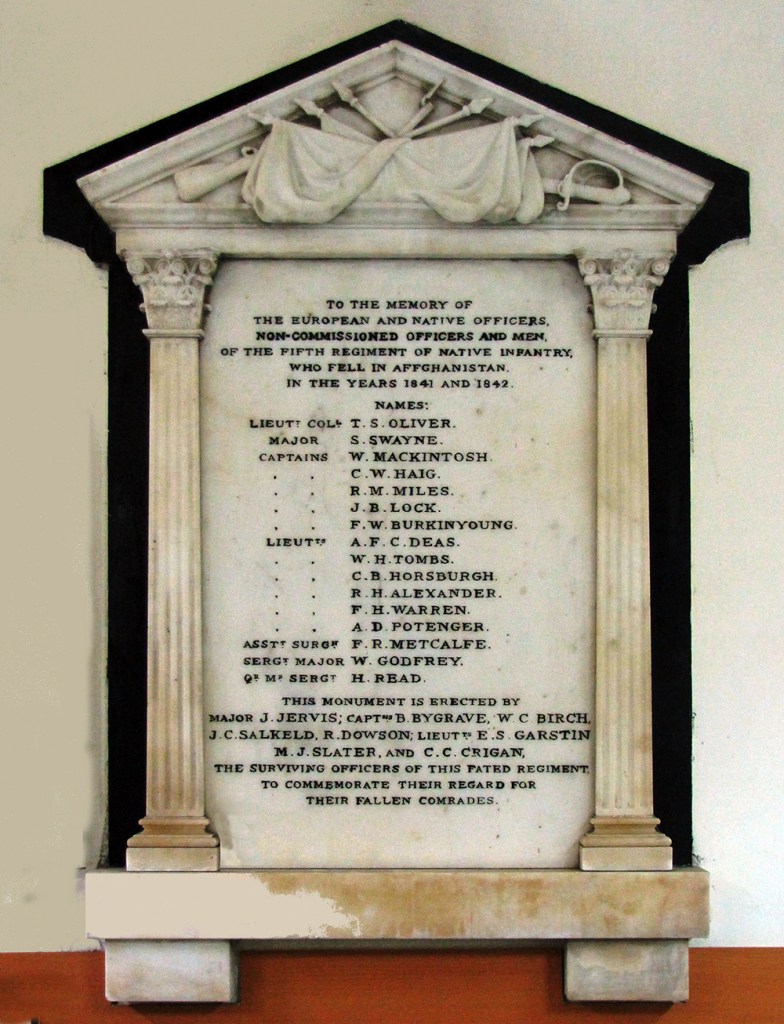
Sunday 10th Breakfasted early in order to be in time for the Fort Church will commences [sic] at 10 O.C. what a pretty church it is it never struck me so forcibly before, the beautiful painted glass over the Alter [sic] so different from what I have been accustomed to see in the Upper Provinces, the wood work so well carved and in keeping with the gothic style of the Building[.] it recalled my dear Sister5 very forcibly to my mind in our Childhood we used to think a great deal of the anniversary of our Birthdays, dear Matty was born on St Peter’s day, the 29th of June, this Church is called St Peter’s, the last time I had entered it, was with her, how many years had fleeted by since those days and how long since she was called to a better World, and yet it seems as if it were a few short days, since we were side by side, My Father16 and Uncle had often been in that Church, and now the only mention of their names is on the Tablets erected to the memory of those who fell in Caubul,17 such is life!
When we came back I felt very tired from having nothing to do, the excitement of the last few days made me feel the quiet of today more[.] I wrote to Mrs Watt,18 and was glad to find they are in Calcutta, I will try and see them tomorrow, that is if the Kennedy’s will allow me, as I spend tomorrow with them, A Mr Scott dined here today, he is the Head School Master to the young descendants of the celebrated Tippoo, the King of the Mysore Country. One could tell he was a School Master from his talking of nothing but Historical Books and using finer words which were not at all requisite. Took a drive on the Course, one short turn, before going again to the Fort Church, just as we turned I caught a glimpse of my old freind [sic] Mrs Jane Oxborough, she is now Mrs Henry A. but I cannot find it in my heart to give her her proper name, such a foolish, (to say the least of it) marriage as she made[.] with an effort I prevented myself recognising her, I longed to do so, as she evidently knew me at once for she said something to her Husband, and kept looking towards me, but I must wait till I hear from Robert, whose advice I have asked as to whether I might venture to call on her, my heart smote me for pretending not to know her, she must think me very ungrateful for she was very kind to me when I was a child and Kindness in this world ought not to be forgotten! I must close my Journal for tonight as I want to answer dear Mary’s letters or else she may think me ungrateful for them!
Harriet’s journal has been digitised and is available to read in full on the UL Digital Library.
- A broad, flat-bottomed boat.[↩]
- Her son Robert (‘Bobby’) George Swayne Marshall (1841-1915) and daughter Harriett (‘Harry’) Susan Marshall (1842-1926).[↩]
- Bhagalpur.[↩]
- Captain Robert Gibbs Kingdom (1817-1847) and his wife Sarah Eliza née Cameron, who subsequently married James Fagan.[↩]
- Matilda Swayne (b. 1823), who had died in August 1840 aged 17.[↩][↩]
- Harriet Maria née Johnstone.[↩]
- Dr Robert George Marshall (1813-1857), an army surgeon.[↩]
- Mary Swayne (1831-1872); she married Charles Mordaunt FitzGerald in 1850.[↩]
- A sedan chair carried by four bearers; also called a palanquin or palankeen.[↩]
- Probably the home of William Orfeur Cavenagh (1820-1891) and his wife Elizbeth Marshall Cavenagh née Moriarty (1816-1895).[↩]
- Dhurrumtollah or Dharmatala; now Jawaharlal Nehru Road.[↩]
- Captain James Don Kennedy (1806-1898).[↩]
- Eliza Madelina Kennedy née Turner (1820-1870), wife of Captain James Don Kennedy.[↩]
- Harriet’s brother, James Dowell Swayne (1827-1916).[↩]
- Sealed.[↩]
- Major Stephen Swayne (1788-1842).[↩]
- Harriet’s father had died on 10 January 1842 during the retreat of the British and East India Company forces and their civilian camp-followers from Kabul during the First Anglo-Afghan War (1838-1842).[↩]
- Elizabeth Watt née Worsley, wife of Captain Edward Watt (c. 1802-1864) of the 6th Bengal Light Dragoons.[↩]

You must be logged in to post a comment.