
by Liam Timmins, 2024/25 student
From the late 1870s the economic, political and societal influence of the landowning elite in Ireland saw a gradual decline impacted by public agitation during the Land Wars, improved legal tenant rights, along with the rise of Nationalism and demand for political reform. From the 1880s a series of Land Acts were implemented by the state to transfer land away from the elite, the most effective debatably to accelerate the process being the 1903 Land Act (the Wyndham Act) where landowners were incentivised to sell their landholdings to the Estate Commissioners for cash.1 As their influence over Irish landownership declined, some families turned to industry and enterprise to maintain their financial and societal status. Here I will use Windham Wyndham-Quin (the 4th Earl of Dunraven) as a case-study of this phenomenon and, using my assigned letter as a reference, will propose the decline of the Ascendancy and their landowning influence contributed to Dunraven’s own transition from landlord to ‘tobacconist’ and Limerick entrepreneur.

The Quin family, originally of Gaelic descent, trace their origin in Adare to the seventeenth century. Valentine Quin (approx. 1680-1744) was assumed to build the families original two-storey Georgian house c.1720 and afterwards the family developed their estate and acquired more land, benefiting by marrying well. The marriage of Windham Henry Quin (1782-1850) to Caroline Wyndham (1790-1870) in 1810 tied the Quins to English nobility, which effectively allowed Windham’s father Valentine Richard Quin (1752-1824) to adopt the peerages of ‘Viscount Mount-Earl’ and later ‘1st Earl of Dunraven’ in 1822 and in successive generations the family line became the Wyndham-Quins. Caroline and Windham’s influence can also be found in their architectural developments at Adare Manor from the mid-1820s where, upon moving back to their Limerick estate from London, they began developing the Tudor-Gothic features associated with the house.2
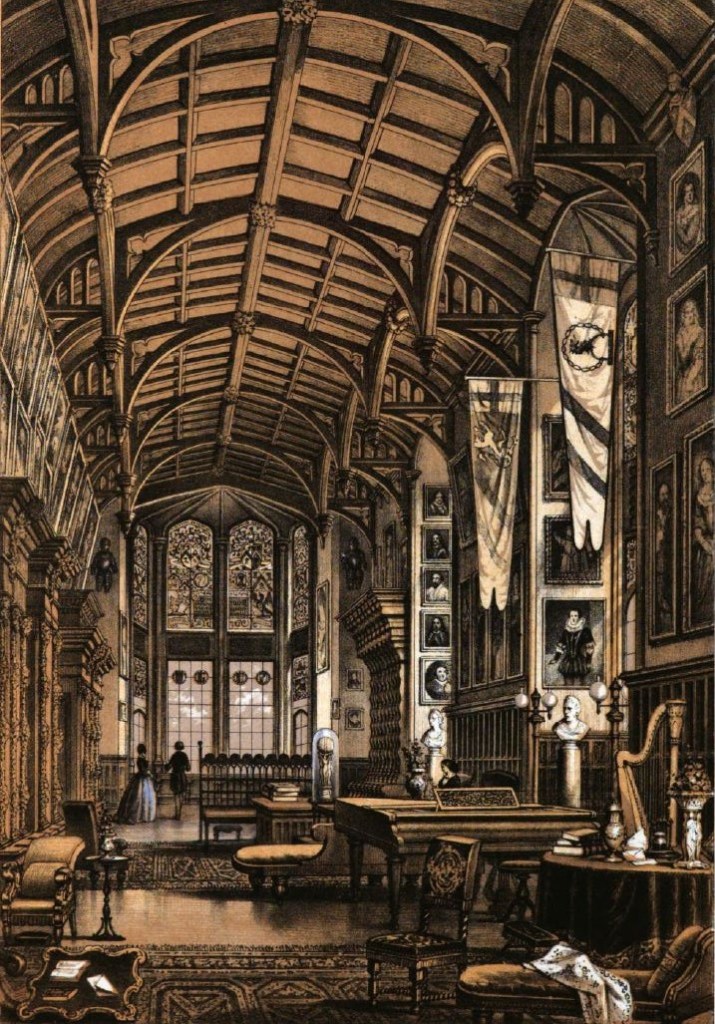
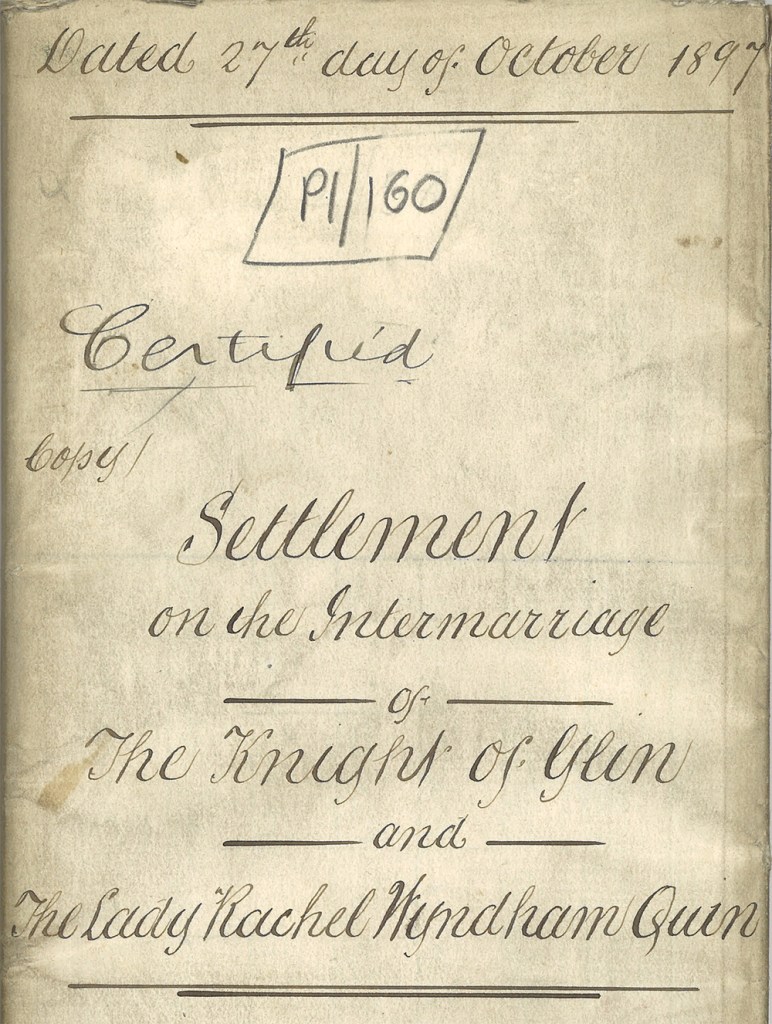
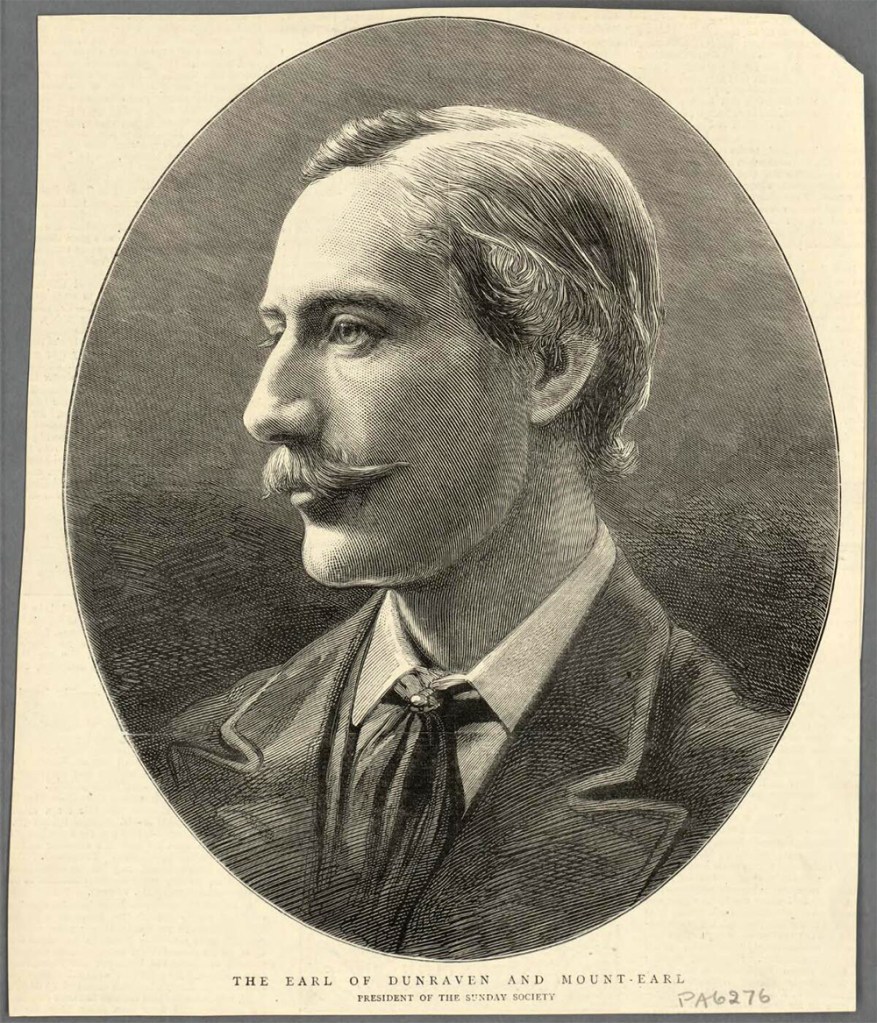
Their grandson Windham Wyndham-Quin grew up in Dunraven Castle in South Wales and was raised in Adare from 1850 under Catholic tutorage at his father Edwin Wyndham-Quin’s (1812-1871) insistence. Later Windham enrolled at Christ Church, Oxford in 1858 where he first became interested in army life, later serving as Lieutenant in the 1st Life Guards and serving as an international war correspondent for the London The Daily Telegraph. In Christ Church he also first began yachting, later competing on his vessels the Valkyrie II and the Valkyrie III attempting to win the America’s Cup in 1893 and 1895 on the Challengers side.3 Some of Windham’s acquaintances were also tied to yachting including Sir Thomas Lipton, although Windham was sometimes regarded as a poor sportsman baselessly accusing the Defenders side of cheating in his 1895 bid upon losing.4 Windham married Florence Elizabeth Kerr (approx. 1842-1916) in 1869 who together had three daughters, and in 1871 Windham became the ‘4th Earl of Dunraven’ upon his father’s passing. His second daughter Lady Rachel Charlotte Wyndham-Quin (1872-1901) married Desmond FitzJohn Lloyd FitzGerald in 1897 which also brought funding for the Glin’s of Fitzgerald estate.5 Fitz and Dunraven maintained regular correspondence following Rachel’s death during childbirth in 1901, including discussions of the upbringing of her child (later the 28th Knight) and finding a suitable mother figure to replace her.6
Dunraven was also a prominent politician acting as a local councillor and senator in the UK Parliament and Irish Free State. Arguably his most significant political accomplishment during his lifetime was presiding over the Land Conference Committee and publishing the report which influenced the 1903 Wyndham Act.7 Availing of the Land Act, Dunraven issued 11,694 acres of his Adare and Croom estate to the Estate Commissioners in June 1906. By 1910, Dunraven effectively had his entire Limerick estate for sale upon settling the transfer of remaining lands surrounding Croom town, alongside the Glins who had sold their demesne by then.8 Prior to the Land Act, Dunraven already initiated his own enterprises internationally; earlier in 1897 he purchased the rights for the Monotype Casting Machine and established the ‘Lanston Monotype Corporation’ with two machines in Philadelphia and Salfords, Redhill for producing newspapers and other print.9 Regardless the disposal of his estate was fundamental in his increasing focus on Limerick enterprise, particularly local tobacco and cigarette manufacturing industries. In 1908, he was quoted at a Limerick Industrial Association meeting as no longer identifying as a landlord but instead as a tobacconist.10 Dunraven had indicated back in 1886 at the House of Lords his interest in experimenting with tobacco cultivation, but only upon the passing of the Irish Tobacco Bill 1907 repealing the law restricting its growth in Ireland had he begun growing the crop. By 1910, an extensive tobacco plantation was established in Adare with seven smallholders contributing to its production.11 Dunraven’s land agent Robert Rennie Ballingal was responsibility for overseeing tobacco production in Adare, alongside his other estate management duties.12)
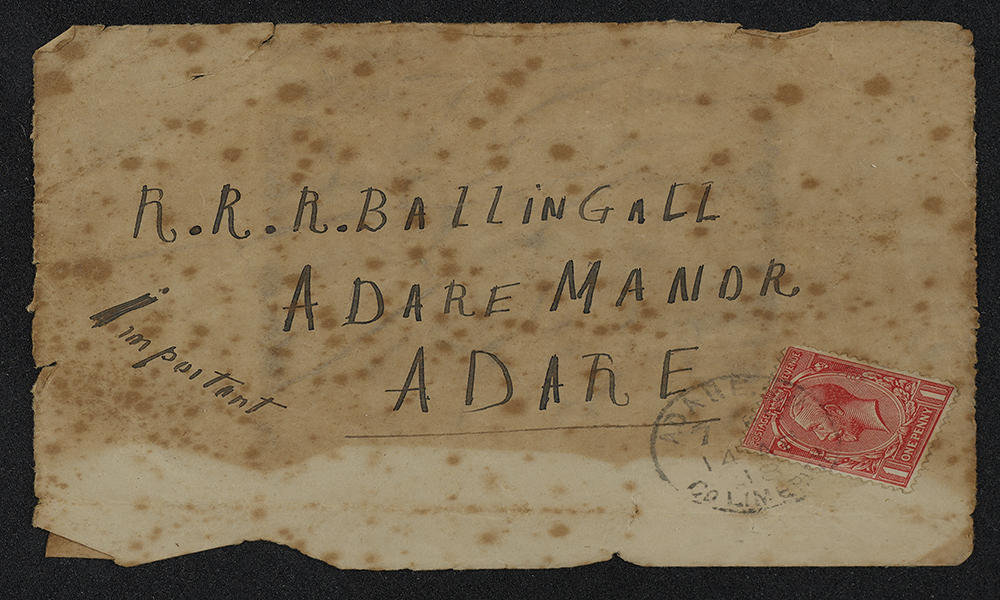
These experiments were intended to produce suitable tobacco to later start manufacturing cigarettes commercially. As noted in his letter to Fitz, Dunraven was interested in forming a cigarette manufacturing company with Mr. William Bailey, approaching Limerick and national businessmen to form the board. Mr. Bailey, son of a Kings County landlord, himself made his fortune in rubber plantations in Malaysia and, upon leaving in 1906, would later purchase and settle in Plassey House, Co. Limerick.13 In 1911, construction began on a cigarette factory located opposite the local hotel. The factory was owned by the Adare Cigarette Company (different to the prior proposed company) registered in June 1912 with a board of directors including Dunraven, Ballingal, William Holliday and Archibald Murray.14 The factory used tobacco from Dunraven’s plantations to manufacture the cigarettes, along with imports from the US, Turkey and Egypt. The factory employed about 70 workers, including a large number of women, to meticulously separate the leaves into five grades of quality. The factory also supplied some of their crop to the Belfast-based Messrs Gallagher tobacco manufacturers,15 a company Dunraven previously indicated as competition to his cigarette manufacturing interests. In early 1915, Dunraven invested £2,000 into a Proctor machine in his factory assisting in the production of his tobacco. Unfortunately the 4th Earl faced a significant setback on January 1, 1917, when the Proctor Machine and its house were engulfed in a fire destroying 4,300lbs of tobacco and halting their operations. Production continued at a limited capacity in 1918 but further damage was brought to his enterprise with another fire in March 1919 at the cigarette factory, destroying the building. Influenced by a general decline in the Irish tobacco industry and these setbacks, the shareholders decided at a meeting on February 23, 1922, to wind up the cigarette company and halt production entirely within the following two weeks. Tobacco harvesting effectively ceased in Adare the following year.16 Dunraven died on June 14, 1926, following a short illness and his remains were returned by his yacht to Adare where he was laid to rest.17
The 4th Earl of Dunraven was born into a generation of Irish landowners who witnessed the decline of their Ascendancy across their lifetime. Although Dunraven’s legacy is also tied to great political, militaristic and sporting achievements, his transition to being a ‘tobacconist’ represents a shift of identity away from landlordism following the Land Acts. Although unfruitful in his entrepreneurial pursuits, the 4th Earl is a fascinating case study of how the declining Ascendancy adapted to their time and attempted to form a lasting legacy outside of landownership.
Please note all student submissions have been edited where necessary for accuracy and clarity.
- Terence Dooley, Burning the Big House : The Story of the Irish Country House in a Time of War and Revolution (Yale, 2022) pp 3-14.[↩]
- Judith Hill ‘Gothic in post-Union Ireland: the uses of the past in Adare, Co. Limerick’ in T. Dooley and C. Ridgway (ed. 2), The Irish Country House: Its Past, Present and Future (Dublin, 2015) pp 61-74.[↩]
- Michael V. Spillane, ‘The 4th Earl of Dunraven, 1841–1926: a study of his contribution to the emerging Ireland at the beginning of the 20th century’ (PhD thesis, University of Limerick, 2003) pp 10-2.[↩]
- New York Times, 13 Sep. 1895.[↩]
- Certificate Copy of Marriage Settlement, 27 Oct. 1897 (UL Special Collections, The Glin Papers, P1/160).[↩]
- The 4th Earl of Dunraven to 27th Knight of Glin, 4 Nov. 1905 (UL Special Collections, Glin Papers, P1/303).[↩]
- Patrick John Cosgrove, ‘The Wyndham Land Act, 1903: The Final Solution To The Irish Land Question?’ (PhD thesis, National University of Ireland Maynooth, 2008) pp 31-5.[↩]
- Spillane, ‘The 4th Earl’, pp 192-3.[↩]
- Claire Badaracco, ‘Innovative Industrial Design and Modern Public Culture: The Monotype Corporation, 1922-1932’ in Business and Economic History, 20 (1991), pp 227-88.[↩]
- Limerick Chronicle, 8 Dec. 1908.[↩]
- Spillane, ‘The 4th Earl’, pp 228-30.[↩]
- Liam Hayes, ‘Trouble and threat at Adare Manor, April 1918’ (BA article, University of Limerick, 2024) (Published online on Special Collections blog here, accessed 20 Nov. 2024[↩]
- Straits Budget, 13 Oct. 1910.[↩]
- Spillane, ‘The 4th Earl’, pp 230-1.[↩]
- Tadhg Moloney, The Impact of World War One on Limerick (Cambridge, 2013), p.160[↩]
- Spillane, ‘The 4th Earl’, pp 233-8; Windham Wyndham-Quin, Past times and pastimes (London, 1922), p.118.[↩]
- Spillane, ‘The 4th Earl’, p.353.[↩]

You must be logged in to post a comment.