
by Anna-Maria Hajba, Archivist
Join us on a journey from Calcutta to the Island of St Helena through the pages of a journal kept by Harriet Marshall between 9 January and 4 April 1847 on her way from Allahabad to County Tyrone. A weekly blog post series, running 10 January to 4 April 2025, presents transcriptions from her journal for the preceding week.
23rd March 1843. The breeze still continues to bear us on to St Helena[.] all yesterday I was laid up not feeling very well so kept close in my cabin till dinner time & after dinner went upon deck to read & enjoy the delightful sea breeze, I sat up there till near 9 O Clock[.] had a chat with Mr Matthews one of the younger gentlemen about Cerne Abbas, Weymouth & Salisbury, all those places he knows very well. Shortly afterwards retired to my own cabin perfectly wearied out. My servant Mrs Mason knows many of the people in Ireland whose names I have heard Robert1 mention such as the Richardson Bells, the Crossleys[,] Mr Young the Rector of Killihil.2 She told me some days ago of a conversation that one of the young midshipmen had with her whose name is Scott[.] he comes from [blank][.]

What a sad pity dear Robert could not have met with all those people, he would have been so delighted to have had a chat about his dear old county Tyrone. How strangely we meet with people in this world. Another instance of those meetings is with the Doctor, he knows all Dr Howden’s3 family in Scotland so well[.] I must mention this in my first letter to Robert, Dr Howden may remember his countryman, & then Robert will know what a very superior kind of person our Doctor, when I say superior I only mean by comparing him with the kind of person I had formed an idea of in my own mind of a ships Doctor, but I must be forgiven for my ignorance on the plea of being such a very inexperienced traveller. Live and learn is the adage but travel & learn will be my case.
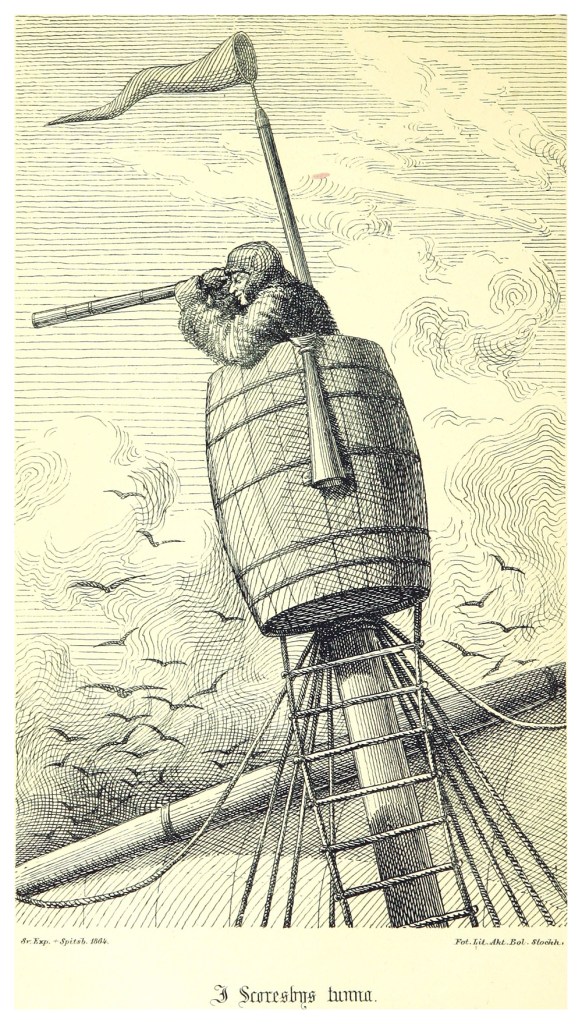
24th March 1847. Wednesday. All on the lookout most anxious to get to St Helena[.] some say we shall be there on Sunday evening and others say Monday, how I wish that instead of only reaching St Helena we could be looking out for England, I never will come out by ship, here there is nothing to interest & keep one in spirits[.] the smell from the Hold is daily becoming more disagreeable, every cabin above & below stairs is alike, only for ones below there is little or no ventilation, our Ports have shut for weeks together, & when they are opened, it is at the risk of shipping a sea,4 which makes matters worse than before, I wonder what Robert would say to all these smells[.] he would hardly breathe or have health in such an impure atmosphere[.] what a mistake I made in allowing myself to be talked to taking a cabin below, I repent my inexperience every hour of the day & so do the Kennedy’s5 who allowed themselves by Major Rowcroft who all the time is enjoying himself above. I will undergo any inconvenience & rough travelling rather than come back by sea to India[.] in an Overland trip there is something stirring every day, but here we breathe an impure atmosphere, & when we do go upstairs it is only to walk up & down, & try & make yourself agreeable to an unfortunate like yourself[.] nothing stirring but the ship & that perhaps at times at the snail like pace of 3 or 4 knots.
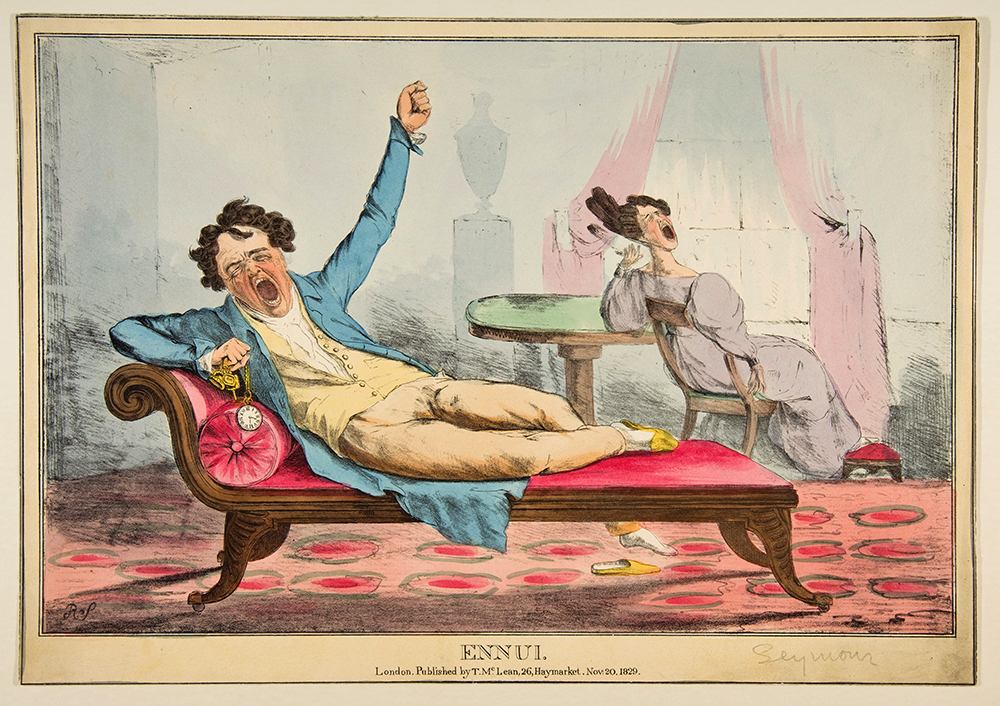
Nothing interesting to one who has been accustomed to having agreeable lively good tempered people around them, on board ship no one thinks they are called upon to be agreeable to their neighbours & a series of petty warfare is carried on by children & their Parents. Defend me from a tiresome tedious disagreeable sea voyage again with a Captain who has no fun in himself & therefore cannot understand why people like to laugh. Captain Henning6 I believe to be a very conscientious man but he is too much accustomed to command to be pleasant to an equal, I must get a book to try & divert my idea’s [sic] into a pleasanter channel[.] no personal communication will amuse me in my present state of spirits, so what a blessing a book will be!
26th March 1847. Friday. 8 weeks or 56 days on board today. It has been most delightful weather all yesterday & today, the Ports have been opened for a an [sic] unusual long time & that too without any shipping any sea’s[.] I spent all yesterday in an unprofitable manner, as soon as the Ports were opened I sat down to read & write but I had not been long engaged in the former pursuit before Eliza7 called out to me as she was going to sit & work in her cabin, so to be more sociable I carried by desk & self into the cabin, I tried to go on but with such chatter boxes as we both are it is difficult to keep one’s attention fixed so from one topic to another till we got to Poetry when a fit of teazing came over me, and I set to work & insisted upon her listening to a quantity of Poetry. She has no soul for this & it is Penance to her to hear it even.
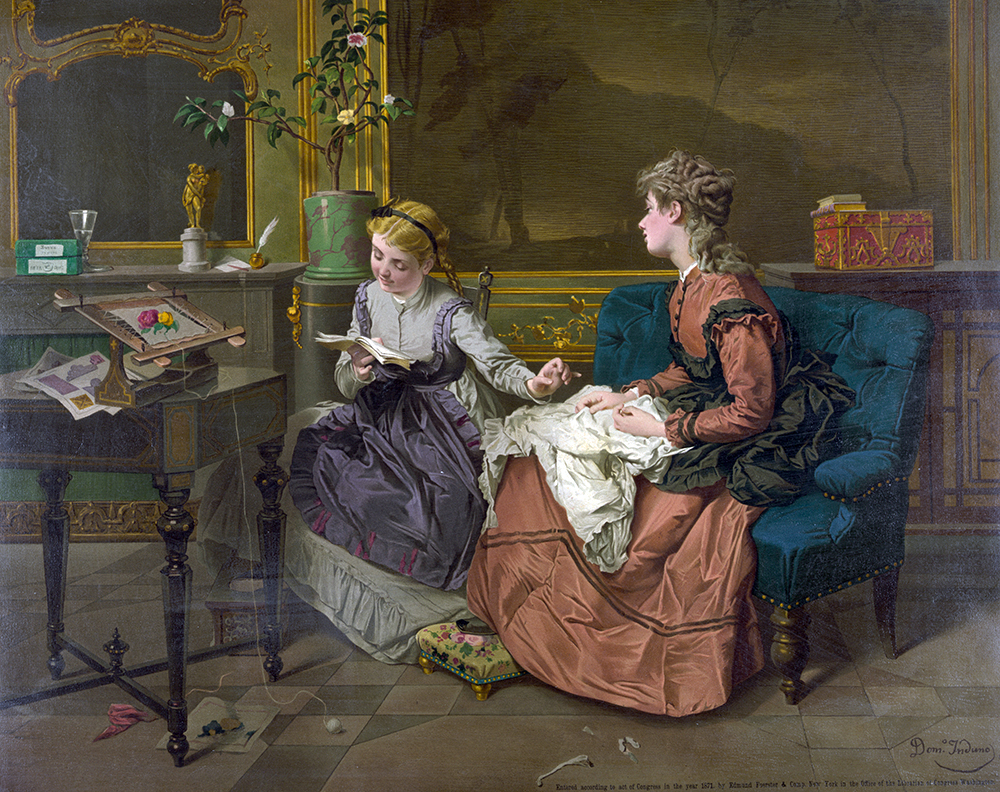
This is the idle way I spent yesterday[.] today I have been very industrious sitting on the Deck, the only Lady as usual working at a chain for Robert which I intend to send out in the first Letter from England. The weather was truly delightful on deck, a delicious breeze and a bright sunny day[.] I was thinking whilst enjoying this delicious fresh reviving sea breeze that at Allahabad, dear Robert Mary8 & Mamma9 are obliged to sit down to meals with a Punkah10 pulled over them & looking out for the Tea Pots to be opened & here am I gaining daily health and strength, I wonder if my dresses will fit me by the time we reach England[.] I am quite amused at my own amazing stoutness, I never knew myself so stout before, I shall lose it all I think when I am once more on shore. The children are improving also, tho’ my Harriet11 still looks pale, as for Master Bobby,12 he is so stout and rosy. Captain Watt13 has been amusing himself by teaching the boys to fight, my boy has proved himself quite a Trojan, he fights most manfully & seems to enjoy it, Jimmy Kennedy14 has no chance with him. I hear Mrs Henning’s15 Piano, I would like to go into her cabin very often, but as soon as the Piano is opened several ladies go in, the cabin being so very small it is not pleasant when 5 or 6 people go in, so I hardly ever go in.
27th March 1847. Saturday.
We had a very merry dance last evening, the Spanish Dance was the finale, I felt so tired after it, the little Captain was my partner. I tried a waltz with Mrs Henning and thought we got on very well but she was so giddy after a few turns that I was obliged to hand her to a seat. After writing my journal yesterday which I did after Dinner Eliza sat me down to my guitar which I amused her with till it was quite late in the evening when we went upstairs on Deck and walked by ourselves till Tea time after which the Dancing commenced, the evening was so mild that the children remained till 8 O.C. Little Harry amused herself by Dancing 1st with Captain Kennedy then Mr Matthews one of the young gentlemen and last with the Captain.
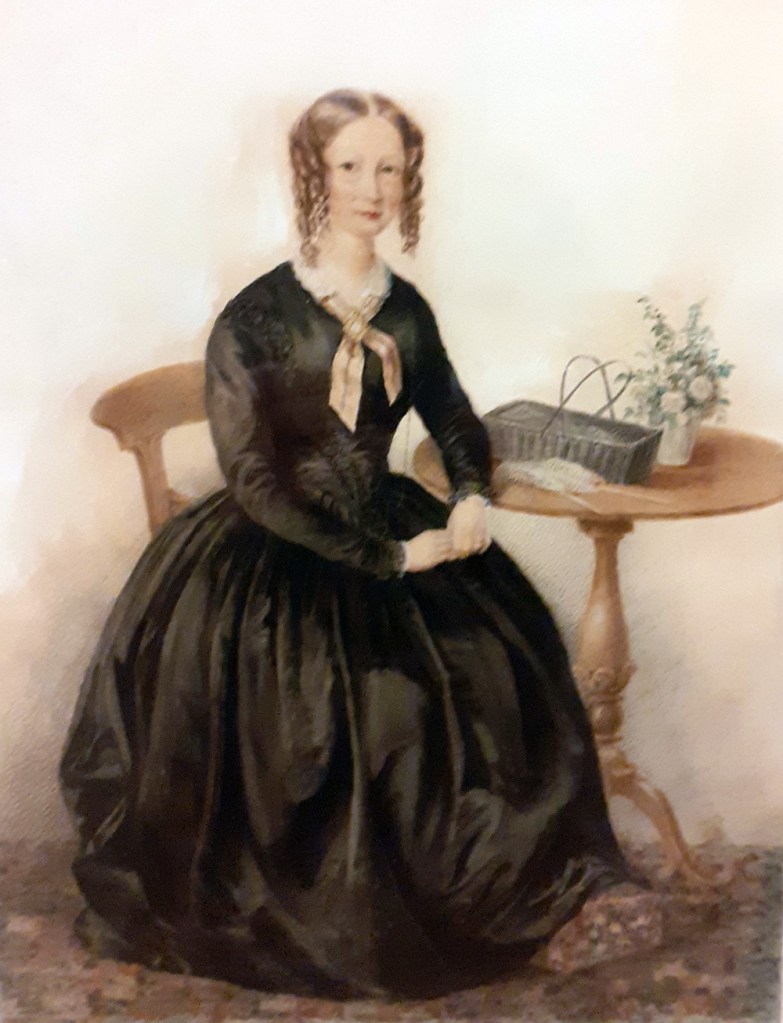
This being scrubbing day, I made my escape on deck immediately after Breakfast taking the children with me so as to have Mrs Mason uninterrupted in her labour of cleaning & scrubbing the cabin[.] it was much warmer today than yesterday so I came down to my own cabin at 12 O.C. & have been here since.
We shall I am afraid not be at St Helena till Tuesday morning[.] how delightful a walk on shore will be!!
Harriet’s journal has been digitised and is available to read in full on the UL Digital Library.
- Harriet’s husband, Dr Robert George Marshall (1813-1857), an army surgeon.[↩]
- She probably means Killeeshil, County Tyrone.[↩]
- Dr William Marcus Howden (1819-1847), Assistant Surgeon 35th Light Infantry.[↩]
- To ship a sea = to have a large wave wash over one’s vessel; to be swamped or flooded by a wave or surge of water over the side.[↩]
- Captain James Don Kennedy (1806-1898) and his wife Eliza Madelina Kennedy née Turner (1820-1890).[↩]
- Commander Alexander Henning (c. 1792-1871), captain of The Alfred.[↩]
- Eliza Madelina Kennedy née Turner (1820-1890).[↩]
- Harriet’s sister, Mary Swayne (1831-1872); she married Charles Mordaunt FitzGerald in 1850.[↩]
- Harriet Maria Swayne née Johnstone.[↩]
- Punkah = a large rope-controlled fan fixed to the ceiling operated by a servant.[↩]
- Her daughter, Harriett (‘Harry’) Susan Marshall (1842-1926).[↩]
- Her son, Robert (‘Bobby’) George Swayne Marshall (1841-1915).[↩]
- Captain Edward Watt (c. 1802-1864) of the 6th Bengal Light Dragoons.[↩]
- Eliza Kennedy’s eldest child, James Edward (‘Jimmy’) Kennedy (1841-1865).[↩]
- Melina Henning née Smith, wife of Commander Alexander Henning (c. 1792-1871), captain of The Alfred.[↩]

You must be logged in to post a comment.