

by Rebecca O’Regan, BA History Student
Photo albums provide a rare glimpse into the everyday lives of historical families and deepen our understanding of their social class, views and values. They add a personal touch and allow us an emotional connection with the people involved. Moreover, they can be explored as an intimate and detailed example for wider contemporary issues and historical studies.
A photograph album compiled by the O’Mara family, between c. 1927 and 1932, forms part of the O’Mara Collection at UL Special Collections (P40/912).
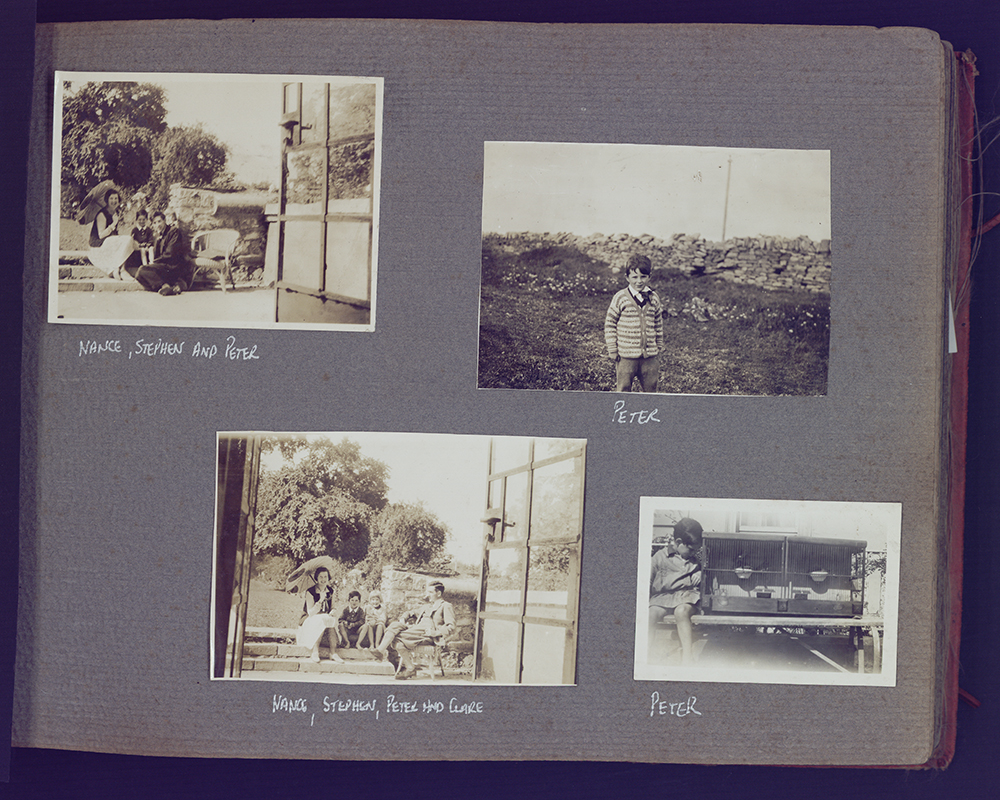
The family rose to prominence through the O’Mara Bacon Company which was established in Limerick in 1838. The business passed through the male line from the founder James O’Meara to his son Stephen O’ Mara and eventually to his grandson Stephen O’Mara Jr. In 1909, Stephen O’Mara Sr purchased Strand House which became the family home and features prominently in the photograph album. The house was built during the Georgian era between 1760-1770 and had previously been owned by several illustrious Limerick families. Strand House remained in the possession of the O’Mara family until 1943 when Stephen O’Mara Jr transferred the ownership to Limerick County Council. It was later demolished in 1959 and replaced by the Strand Hotel.
The Album
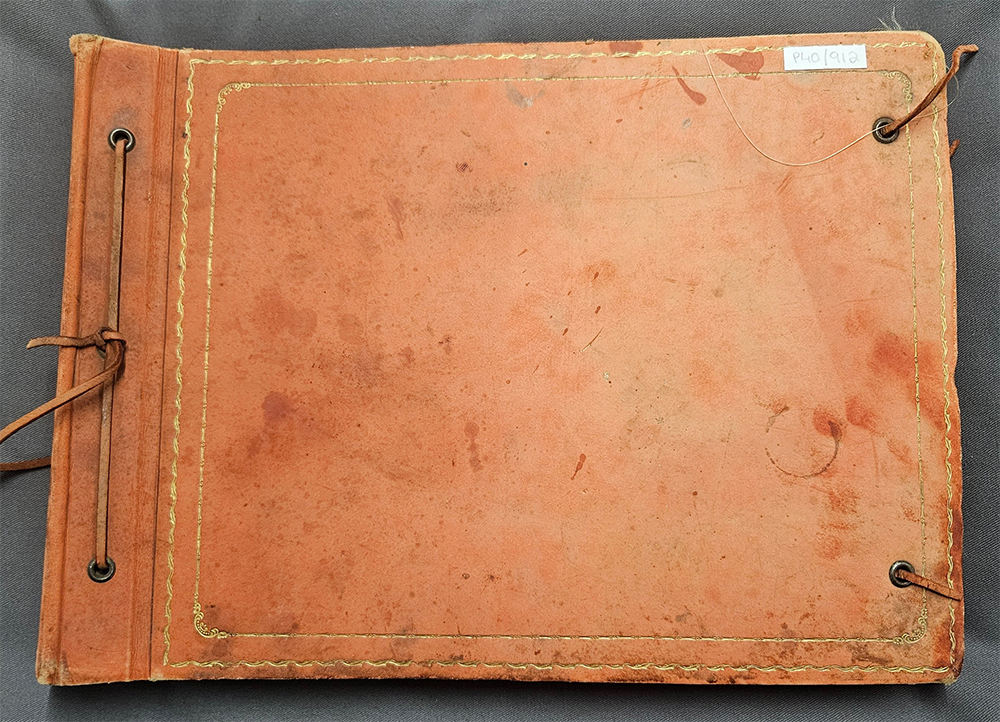
The album is made with a calf skin binding which is dyed red with gold tooling around the edges. It is bound with brown calf skin leather ties and has brown silk doublures on the inside covers. The size of the album is 34x25x4cm, and it consists of 30 pages of a strong corrugated cardboard texture each covered in black and white photographs; however, some of the photos have become discoloured due to age. Captions can be found under many of the photos written in white ink by the family indicating the people, places and years in question. Depending on the size of the photograph there are between 3 to 7 photos per page. The photographs are organised thematically rather than chronologically.
Picturing Leisure
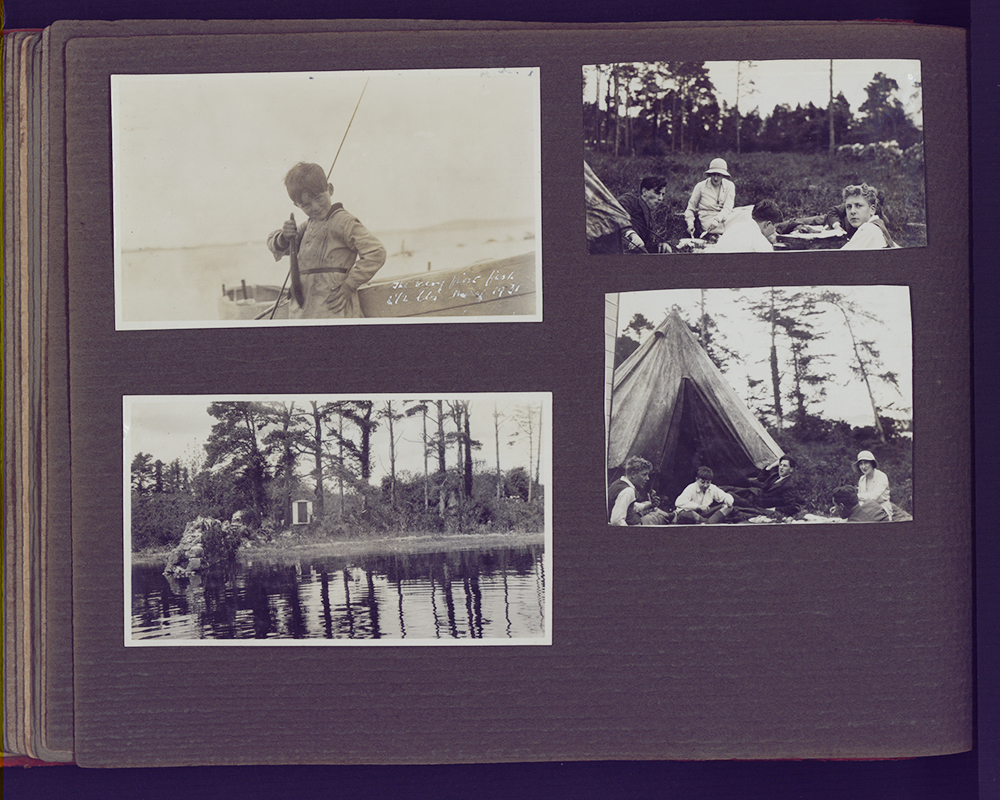
As with any family photograph album, holidays and leisure time feature prominently among the pictures. This album contains approximately 130 images which depict the family on holidays both at home and abroad. Trips to beaches with the children of the family are included alongside trips to other areas in Ireland such as Achill Island and Lough Derg. Furthermore, the album documents Stephen Sr and his wife Nancy as they travelled around Europe and visited the French and Italian rivieras.
Stephen O’Mara Jr was an avid sportsman and his keen interest in fishing is highlighted consistently throughout the album where images depict both him and his son on fishing trips. Furthermore, there are images of hunting trips and of their attendance at GAA matches. There are around 20 to 25 photos in the album which reference these family interests. The images highlight the dual nature of their interests by integrating pastimes typically associated with the Protestant elites and others with the Catholic majority.
Depicting Politics
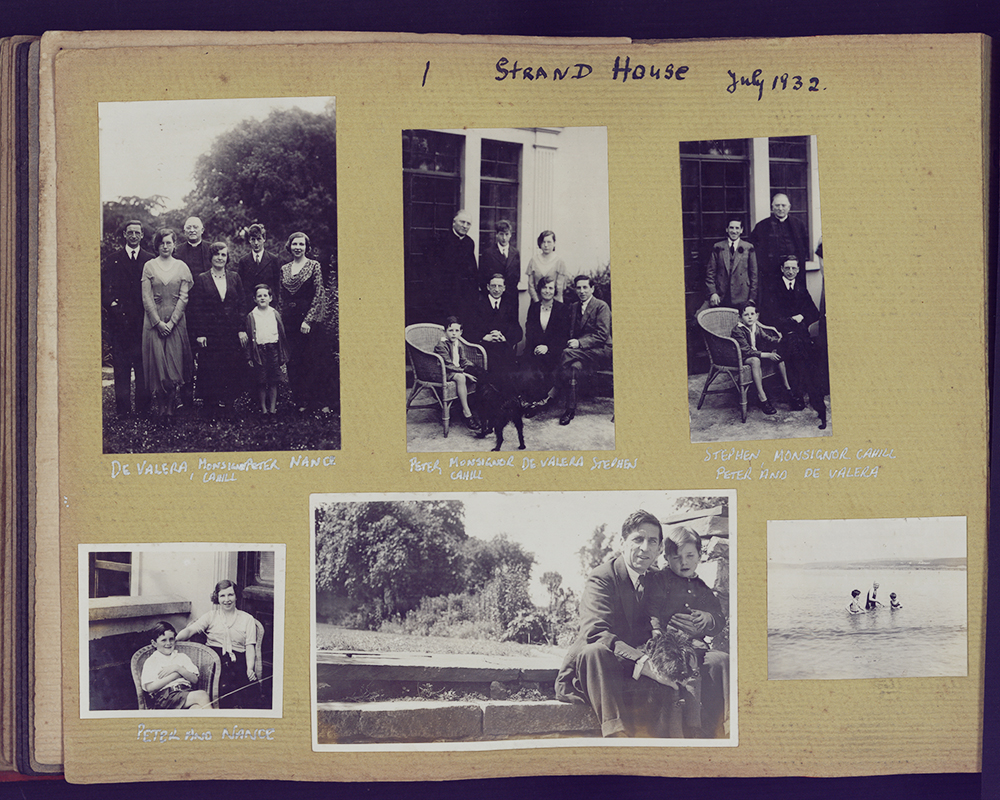
The family was heavily involved in political matters in the late nineteenth and early twentieth centuries. Stephen O’Mara was elected mayor of Limerick in 1921 and remained in the position until 1923 despite the turbulence caused by the War of Independence and the Civil War. In general, the family members aligned themselves with the pro-Treaty side of the contentious debate. However, Stephen O’Mara Jr, who features prominently in the album, was a staunch believer in the anti-Treaty cause. His close relationship with Eamonn De Valera is evident from the three photographs of his visits to Strand House to stay with the family.
At this time, political disagreements could often cause tensions within families. This was not the case with the O’Maras. Although they engaged in debates and disagreements due to political differences, they never allowed this to divide the family. In the picture shown below, several family members who were pro-Treaty allowed themselves to be photographed socialising with De Valera.
Religion and Identity
Despite their upper-class lifestyle, which in Ireland had typically been associated with the Protestant elites, their Catholic faith and Irish identity were of central importance to the O’Mara family. Upon the establishment of the Irish Free State in 1922, the place of the Catholic Church was being consolidated in Irish politics, society and culture. The culmination of this process can be found in 1937 when De Valera wrote the ‘special position’ of the Catholic Church into the constitution 1.
This close relationship with Catholicism can be observed in the O’Mara family photograph album. Prominent Catholic figures of the time including Monsignor Cahill can be seen socialising and spending time with many members of the family in 27 photographs. This represents the new social order which was emerging in Ireland with the demise of the power of the Protestant aristocracy and the emergence of the Catholic elite.

Nature of Photography
In the 19th century, photography was cumbersome, time consuming and expensive. However, innovations from the 1880s onwards led to the development of affordable, portable cameras. According to the Irish Museum of Modern Art, this led a rise in the use of photography for recreational purposes. The improvement of speed and light capture meant that cameras could take more dynamic, natural and unstructured photographs, suitable to family photo albums. Therefore, these photos are particularly useful to capture social, political and cultural events.
This technological development allowed the O’Mara family to record their activities in ways that would not have been possible in previous generations and provides a unique record of their lives. This photograph album offers an intimate glance at the real and private lives of this fascinating family and their social circle. It is a valuable resource for anyone interested in early 20th century Irish history and offers a case study for various political events and socio-cultural changes of the time.

- Louise Fuller, ‘Religion, politics and socio-cultural change in twentieth-century Ireland’ in The European Legacy, 10, 1 (2005), p. 41[↩]

You must be logged in to post a comment.