
by Caoimhe Tuohy, BA History Student
The Allott Papers in UL’s Special Collections are related to the estate and family history of various families in Munster during the eighteenth to twentieth century. The records in this collection are related to the Odell, Morony and Lloyd families, and the Odellville estate. The collection is divided into three sections; the first containing information on leases, mortgages and settlements, the second involving household accounts and farm records, and the third mainly comprised of material relating to the Morony family and items of Quaker interest. The item under discussion here is a scrapbook from the nineteenth century (P27/3/1/4).

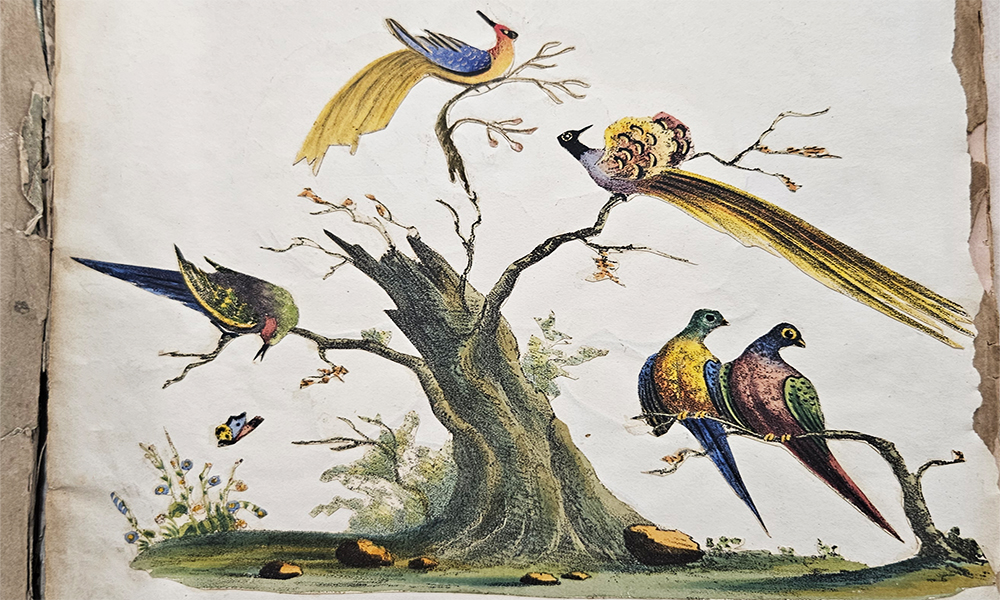
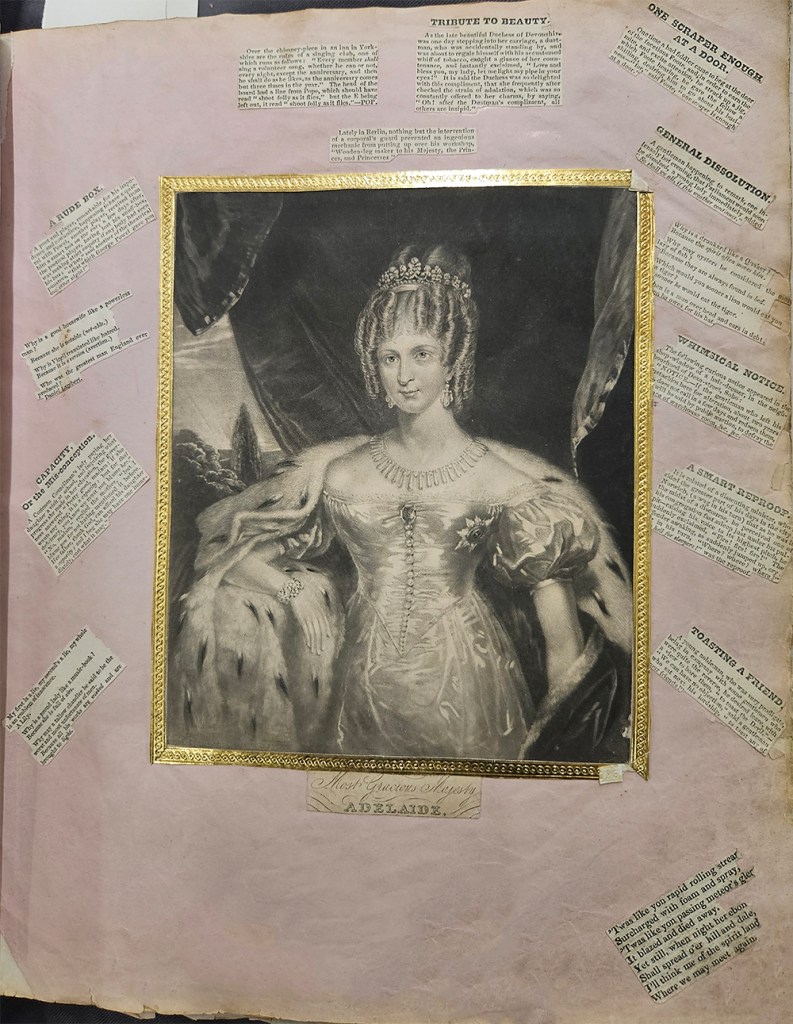
This item contains 132 pages wrapped in a leather bound cover with the name ‘Anna Matilda Watson’ printed on the front in what appears to be gold embossing. Throughout the scrapbook, there are various images of historical figures, as well as landscapes and well-known buildings in Ireland and abroad. Significantly, the scrapbook is listed in the Allott Papers catalogue under the category ‘items of Quaker interest’. Within, there are images relating to religious matters inserted on some of the pages. There are anecdotes, handwritten and printed verse, and drawings. An advertisement for a bridge scorer had been placed in-between the pages also. The book is in a fragile state, with the majority of its pages tattered and worn down due to its age. There are some pages that are loose and no longer bound into the spine. The pages vary in colour throughout the scrapbook, ranging from pink, blue, green, orange, yellow, as well as plain blank pages.
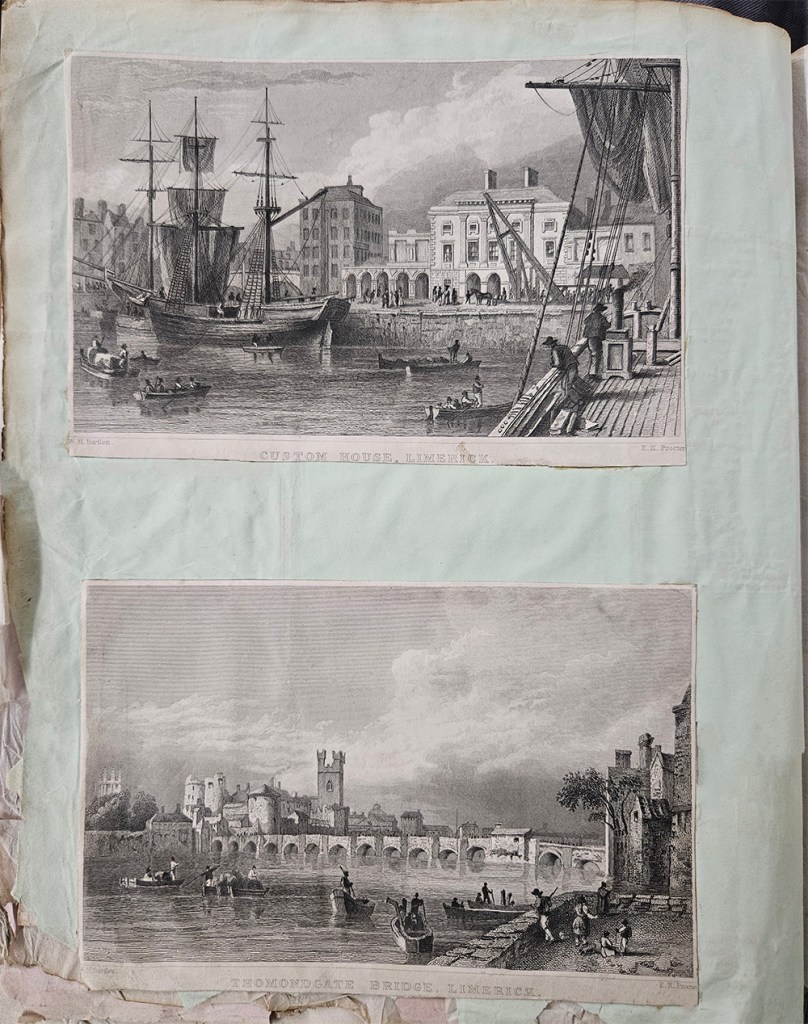
Anna Matilda Watson’s scrapbook is an article of much mystery. The connection between the Watson family and the other listed families of the Allott Papers is still unclear to historians. There is no definitive date related to the item, therefore historians cannot gage a particular age for when Ms Watson compiled the book. As it is a collection of various images and cut outs, it could have been created over a number of years.
The Watsons
Anna Matilda Watson (1868-1962) was the daughter of Joseph Watson and Catherine McNamara. Joseph and Catherine were married in County Waterford, 1861 and later moved to Ardagh, County Limerick where they would spent most of their lives. Born on 2 October 1868, Anna Matilda was the fourth eldest of ten children. She married Christopher Delmage Switzer in 1888 when she was just nineteen years old. Switzer was the son of Jane Watson, Joseph Watson’s sister, making Anna Matilda and Christopher cousins. The pair had a total of thirteen children and resided at Courtmatrix, County Limerick.
Religion
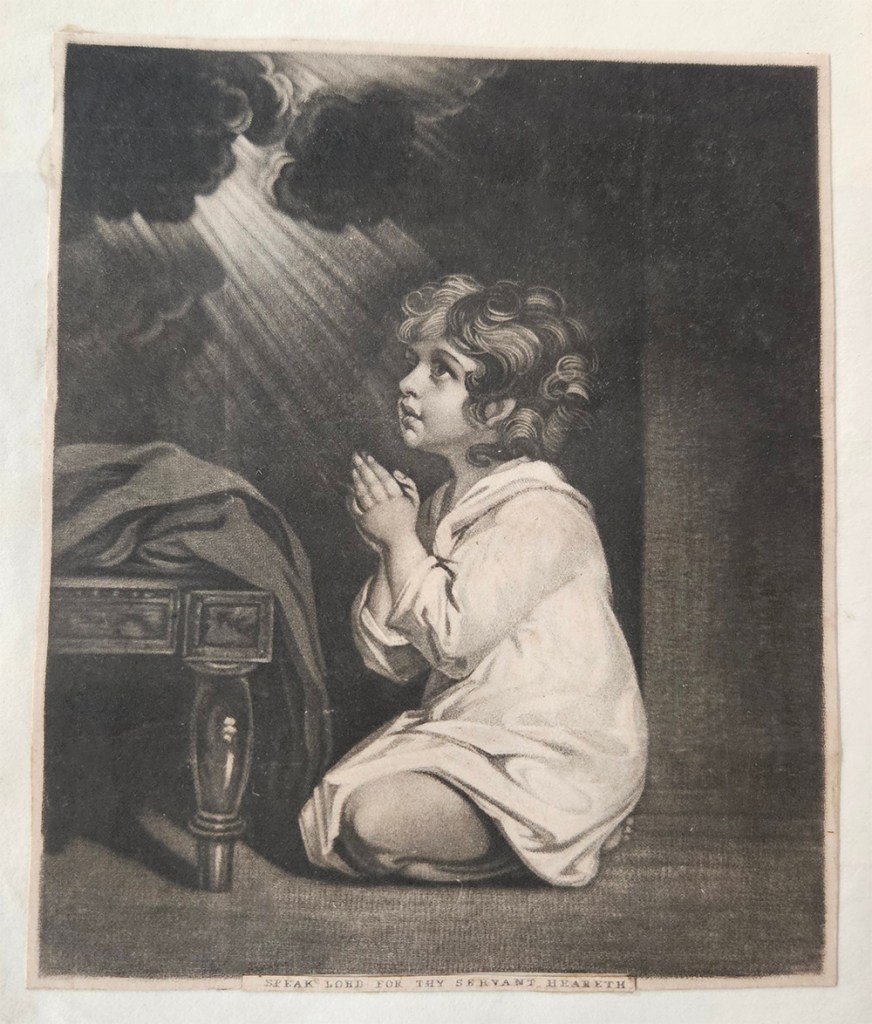
Images of significant religious events have been inserted into the book. Illustrations of the crucifixion and the resurrection were placed into the scrapbook, as well as an image of a young child with its hands joined together in prayer. The images appear to have be cut outs of magazines and books. The element of religion is central when examining this scrapbook as it is clear that the Watson’s were Quakers, members of a religious society. The frequency of religion throughout the scrapbook highlights the role and influence religion had on her life.
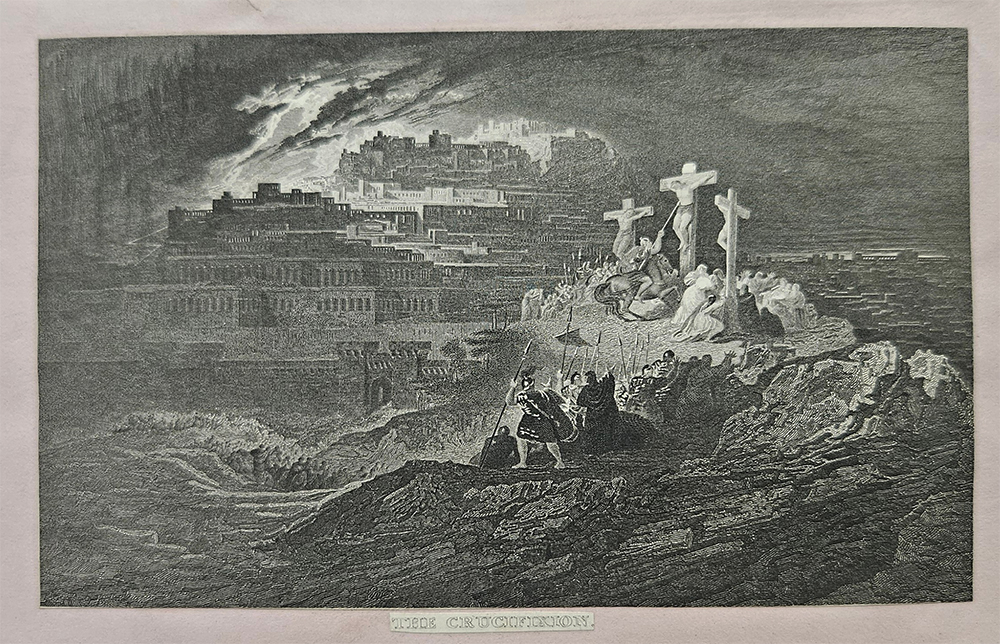
Quaker families in nineteenth century Ireland
The Religious Society of Friends or also known as Quakers, are a religious society that still exists today. The seventeenth century was a time of political and religious upheaval and therefore saw the founding of the Religious Society of Friends. Many people sought alternative means of emulating the Christian ideal after becoming disillusioned with the instability coming from the traditional Christian churches. Quakers have a similar approach to Christianity however, they have minimal rules, regulations and ceremony. The society held meetings in private homes, where they would gather in silence and worship God. The society was praised for the relief they provided during the Great Famine of 18471. They were known for their humanistic and philanthropic work in their communities.
Fashion of the late 1800s
Watson’s scrapbook also contains an array of vibrant illustrations, full of colour and definition. The images give us a glimpse into the style and fashion of the late nineteenth century as, for the most part, the illustrations and photographs that are presumably taken from magazines and newspapers, are of fashionable ladies, dressed in their finest gowns and attire. Typically, ladies fashion of the late 1800s consisted of a stiff structured garments, that became more complex in the 1870s and into the 1880s. This could insinuate that Ms Watson was inspired by their style.

The fashion that is depicted here is related to the general dress code of the nineteenth century, a period where fashion was becoming more than just clothes to wear 2. The Victorian era was known for its stiffness; extravagant dresses, corsets, bonnets, top hats and the likes. Not only does it seem as though Anna Matilda was interested in extravagant fashion choices, it also appears that she was intrigued by the different styles of dress worn by other nationalities. She had inserted images of what would have been the stereotypical attire for countries such as Spain, Poland, Hungary and more. From looking at these cut out images, it gives an insight into the traditional and customary attire of each country.


Anna Matilda Watson’s scrapbook, although a mystery as to its connection to the collection, it is quite insightful in regard to the life of a woman living in the late nineteenth century.

You must be logged in to post a comment.